Developing Theological Vision

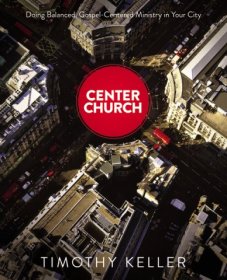
ImageTim Keller wrote a great book called Center Church: Doing Balanced, Gospel-Centered Ministry in Your City. In the introduction, he identifies the path to fruitfulness. The key insight is developing “theological vision,” a phrase he borrowed from Richard Lints (Gordon-Conwell professor, author of The Fabric of Theology).

Lints says, “The modern theological vision must seek to bring the entire counsel of God into the world of its time in order that its time might be transformed.”

And Keller provides eight questions for the development of a theological vision. This is the trajectory of the book overall.

  1. What is the gospel, and how do we bring it to bear on the hearts of people today?
  2. What is this culture like, and how can we both connect to it and challenge it in our communication?
  3. Where are we located – city, suburb, town, rural area – and how does this affect our ministry?
  4. To what degree and how should Christians be involved in civic life and cultural production?
  5. How do the various ministries in a church – word and deed, community and instruction – relate to one another?
  6. How innovative will our church be and how traditional?
  7. How will our church relate to other churches in our city and region?
  8. How will we make our case to the culture about the truth of Christianity?

Keller probing list of questions challenges shepherds to lead their sheep not in generally effective ministry, but in specifically effective theological vision – specific to the city. In other words, Keller’s list is all about contextualization (what else would one expect from Keller?).

He develops his own definition of theological vision, “It is a faithful restatement of the gospel with rich implications for life, ministry, and mission in a type of culture at a moment in history.”

The Hound

Thabiti Anyabwile posted a great section from Richard Baxter’s Christian Directory regarding our understanding of God’s love. It called to mind this amazing verse from Tolkien:

“As the hound follows the hare, never ceasing in its running, ever drawing nearer in the chase, with unhurrying and steady pace, so does God follow the fleeing soul by his divine grace. And though in sin or in human love, away from God it seeks to hide itself, divine grace follows after, unwearingly follows ever after, till the soul feels is pressure forcing it to turn to him alone in that never ending pursuit.”

(from The Neuman Press Book of Verse, quoted in To Change The World by James Davison Hunter. Tolkien is here commenting on Francis Thompson’s important mystical poem, “The Hound of Heaven”)

In and Out

Rejoice in the Lord always. Again I will say, rejoice. Let your bigheartedness be known to everyone. (Philippians 4:4-5)

Our rejoicing is in Christ. It’s one of the things that he works into us (“God works in you, both to will and to work for his good pleasure”). Since we are in union with Christ and we have hope in him, we have constant cause for happy hearts. And as we are happy inside because of Christ, we will be bighearted on the outside towards others (and again, because of Christ).

This word “bighearted” is often translated “reasonableness.” But here’s a little perspective from a definitions guy: “For bigheartedness one may substitute any of the following: forbearance, yieldedness, geniality, kindness, gentleness, sweet reasonableness, considerateness, charitableness, mildness, magnanimity, generosity. All of these qualities are combined in the adjective-noun that is used in the original” (that’s from Bible scholar William Hendrickson).

So there you have it. Celebrate in your heart all day long, because you are in Christ! your citizenship is in heaven. You eagerly await a Savior.

And celebrate outwards towards others. Be bighearted. Let your happy heart spill over into someone’s dismal day. Remember, the Lord is at hand.

Best of all, read all of Philippians 4 and consider the Savior who brings hope and happiness.

Faith Pulls Away the Mask

Christ may act the part of an enemy a little while, as Joseph did, but it is to make way for acting his own part of mercy in a more seasonable time. He cannot restrain his bowels of mercy long. He seems to wrestle with us, as with Jacob, but he supplies us with hidden strength to prevail at length. Faith pulls off the mask from his face and sees a loving heart under contrary appearances.

Fides Christo larvam detrahit (Faith pulls away the mask from Christ).

-Richard Sibbes, The Bruised Reed, page 64

Applying the Method

Bauder suggests and applies three helpful exegetical principles…

When we answer theological questions, we often find ourselves confronted with a variety of evidence. Some of the evidence will point in one direction while some of the evidence may seem to point in one or more other directions. Because the evidence is of different sorts, it carries different weights.

Weighing the evidence to discover an answer is one of the more difficult challenges in theological method. It is more of an art than a science. It usually involves an element of judgment. When the evidence appears to point in more than one direction, we must allow some of the evidence to explain the rest. In other words, part of the evidence will explain not only our answer, but also the remainder of the evidence.

Previously, I have suggested three methodological principles that should guide us in making these judgments. First, didactic (teaching) passages must explain historical references. Second, clear passages (texts that have only one likely interpretation) must explain obscure passages (texts that have more than one plausible interpretation, but in which no single interpretation is significantly more likely than another). Third, deliberate passages (texts that aim to address the theologian’s question) must explain incidental passages (texts that touch on the question only tangentially).

Read more here.

The Magic Lever

David Brooks

The world economy is a complex, unknowable organism. Most of us try to diversify our investments and balance risk and security to protect against the unexpected.

But a few years ago a group of bankers thought they had the magic tool to help them master financial trends and predict the future. Sophisticated risk assessment models would enable them to rewrite the rules and make more money.

Their arrogance was soon exposed. Along came the financial crisis.

Keep reading here.

My Struggling…His Energy

…that I may know him and the power of his resurrection… (Phil 3:10)

For this I toil, struggling with all his energy that he powerfully works within me (Col 1:29)

The Christian’s union with Christ is accompanied by such power as that of his resurrection. This divine fuel energizes the saints for the work of building up the church in order to present everyone mature in Christ.