Category Archives: Uncategorized

Heaven Is For Real

heaven-is-for-real-movieHeaven is for real (regardless of what speculative and unprofitable stories might be told about it on the big screen). And because heaven is for real, it warrants our regular meditation. Thus, the release of the movie Heaven Is for Real provides me with an opportunity to commend a much worthier investment of two hours of your time: reading a biblical reflection on the hope of future life.

One of my favorite sections in John Calvin’s Institutes of the Christian Religion is the chapter entitled, “Meditation on the Future Life.” And it would be well worth your time to read these 8 pages. The title of the chapter exhorts us to devote attention to meditating on the life to come. As Calvin says, “Whatever kind of tribulation presses us, we must ever look to this end: to accustom ourselves to contempt for the present life and to be aroused thereby to meditate upon the future life.”

He qualifies “contempt for the present life” to mean contempt for the contamination of sin, and hope for reunion with God. As he says, “to enjoy the present of God is the summit of happiness”:

For, if heaven is our homeland, what else is the earth but our place of exile? If departure from the world is entry into life, what else is the world but a sepulcher? And what else is it for us to remain in life but to be immersed in death? If to be freed from the body is to be released into perfect freedom, what else is the busy but a prison? 

If to enjoy the presence of God is the summit of happiness, is not to be without this, misery? But until we leave the world, “we are away from the Lord” (2 Cor. 5:6). 

You can read the chapter here and print it for free.

Premeditated Preaching and the Holy Spirit

bible-SunlightJonathan Edwards has provided evangelicals with a model for self-criticism in books such as Some Thoughts Concerning the Present Revival of Religion in New England as well as A Treatise Concerning Religious Affections. In both these works, Jonathan Edwards seeks to provide scripturally-based analysis of various elements in the New England revival. As he assesses the legitimacy of the uptick in prophecy, he notes the tendency we have to be enamored with immediate revelation professed to be from the Holy Spirit, and how we tend to value such experiences even over the already revealed Word of God. Trying to re-proportion this fascination, Edwards writes the following:

The gracious and most excellent assistance of the Spirit of God in praying and preaching, is not by immediately suggesting words to the apprehension, which may be with a cold, dead heart, but by warming the heart and filling it with a great sense of things to be spoken, and with holy affections, that these may suggest words. Thus indeed the Spirit of God may be said, indirectly and mediately, to suggest words to us, and indite our petitions for us, and to teach the preacher what to say; he fills the heart and that fills the mouth…But since there is no immediate suggesting of words from the Spirit of God to be expected or desired, they who neglect and despise study and premeditation, in order to a preparation for the pulpit…are guilty of presumption.

(from Thoughts on the Revival, 437-438)

Sermons Like a Chicken with Galoshes On

While reading brief essays on Biblical hermeneutics, I found these comments to be helpful points of reflection for those tasked with preaching. We need not commend the whole of the author’s hermeneutical approach in order to appreciate these contributions.

Merold Westphal:

Too often sermons remind one of the diner who complained to the cook that there wasn’t much in the chicken soup to justify its name. The cook was surprised, since, as he said, “The chicken walked through the soup twice–with galoshes on.” Too many sermons have walked through the text twice–with galoshes on. The results are likely to be (1) a report of the interesting events in the life of the pastor during the previous week, (2) a motivational speech with occasional biblical allusions, (3) a rant on some pet peeve or pet project of the pastor’s with little or no relations to the text  dishonestly announced as the basis for the sermon, or (4) a repetition of some very general Christian truths which , in the absence of any detectable relation to the text, tend to become platitudes, providing neither comfort nor challenge.

God is alive and speaking to us today. Given who this author is, listening for that word is of utmost existential importance. To take this double task seriously in sermon preparation is not easy. IT calls for thorough preparation in terms of theological education and ongoing reading and for the hard work of struggling with each text as Jacob struggled at Peniel with the man of whom he later said, “I have seen God face to face” (Gen 32:30 NRSV). Good preaching requires serious and sustained wrestling.

Some preachers are embarrassed to preach from an elevated pulpit. Their motives are better than their understanding. The elevation of the pulpit signifies not the elevation of the clergy over the laity but the supremacy of Scripture over the whole congregation, clergy and lay. Preachers should explain this clearly to their congregation. (86-87)

And F. Scott Spencer has this comment to add to the mix:

Especially in the Protestant tradition, nothing is more basic than an open Bible open for everyone’s engagement. Any evangelical sermon worth its salt begins with exhorting the congregation, ‘Open your Bibles to [such and such chapter and verse],’ which introduces the focal text for explication and application. While the preacher then does all the talking from an elevated pulpit, the communication event is well out of his or her hands, because all those open Bibles in the pew are concurrently read and interpreted  by independent thinkers.” (54)

From Biblical Hermeneutics: Five Views, Stanley Porter and Beth Stovell, eds. (IVP Academic, 2012).

Purity of Heart is to Will One Thing

Purity of Heart is to Will One Thing is Søren Kierkegaard’s classic meditation on James 4:8double_minded

“Draw near to God, and he will draw near to you. Cleanse your hands, you sinners, and purify your hearts, you double-minded.”

This book is definitely worth the investment of time. Kierkegaard’s keen insight into human nature is obvious in every line of the book. He explores the nature of the human will and its desires. Reading the book is an exercise in increasing self-awareness, particularly our propensity to be double-minded in our will and desires.

Kiekegaard points out that repentance is a guide that leads us to purity of heart.

“But there is a concerned guide, a knowing one, who attracts the attention of the wanderer, who calls out ot him that he should take care. That guide is remorse. He is not so quick of foot as the indulgent imagination, which is the servant of desire. He is not so strongly built as the victorious intention. He comes on slowly afterwards. He grieves. But he is a sincere and faithful friend. If that guide’s voice is never heard, then it is just because one is wandering along the way of perdition. For when the sick man is wasting away from consumption believes himself to be in the best of health, his disease is at the most terrible point…So wonderful a power is remorse, so sincere is its friendship that to escape it entirely is the most terrible thing of all.”

The Prayer of Jehoshaphat

jehoshNot quite as catchy as “The Prayer of Jabez,” but Jehoshaphat’s prayer is equally memorable. He was one of the good kings of Judah – “he sought the God of his father and walked in his commandments.” And he led all the people to do the same thing. [His story is recorded in 2 Chronicles 17-20]

He sent the priests all over the country teaching the Book of the Law, he tore down high places all over the country, and he set his heart to seek after God. But Jehoshaphat was a mixed bag. He made an alliance with Ahab, the evil king of Israel. He didn’t actually tear down all the high places of idol worship in the land. And near the end of his life, he made an alliance with a pagan king, which God had forbidden.

Nevertheless, the Bible commends Jehoshaphat’s efforts to eradicate false worship and wholly pursue the Lord. He is certainly an easy character to appreciate and identify with.


Jehoshaphat’s prayer. I want to emulate his humble dependence on God. At one point, several foreign kings join together to fight against Judah. Jehoshaphat gathers his people from all the cities of Judah to seek the Lord. He stands up in the midst of all the people and prays to God for deliverance – “We are powerless against this great horde that is coming against us. We do not know what to do, but our eyes are on you.”

This humble reliance on God should characterize us. We should approach each day, each decision, with this prayer, “We do not know what to do, but our eyes are on you.”

Jehoshaphat’s sin. For every good decision he made, there was at least one bad decision. He turned away from sin and sincerely sought the Lord. But despite his godly leadership, he still failed to walk singleheartedly. This is the Christian’s experience of life. As much as I desire to do good, I inevitably incur guilt through poor judgment and sinful selfishness. The root of sin remains.

Seeing a reflection of myself in his sin, I’m thankful again for Jesus Christ, and find myself laying hold of him for the forgiveness and freedom from the weight of guilt.

Blessed is the one whose transgression is forgiven, whose sin is covered,

Blessed is the man against whom the Lord counts no iniquity, and in whose spirit there is no deceit.

(Psalm 32:1-2)

Child Catchers – A Case of Confirmation Bias

Confirmation bias is the tendency to give imbalanced attention to data that supports a preferred hypothesis, while marginalizing evidence that might discredit it. A classic case of confirmation bias seems to be found in recent criticisms of abuses in evangelical adoption efforts.

A recently released book by Kathryn Joyce The Child Catchers: Rescue, Trafficking, and the New Gospel of Adoption criticizes the evangelical adoption movement, painting it as an “adoption industry” that knowingly traffics children and willfully separates families in developing nations at any cost for the sake of finding children for adoptive families. Others have added their own indiscriminate exhortations in light of Joyce’s ill-founded conclusions.

ethiopiaThere are certainly abuses in the world of global orphan care. There are documented cases and likely many more undocumented cases. However, abuses that occur do not jeopardize the legitimacy of adoption in general or inter-country adoption in particular.

Critics argue (with very little supporting data) that although unethical adoptions are not the norm, they do happen, and thus we should be on “high alert.” However, their selective data and exaggeration of data must put readers on high alert – not to human rights abuses but to journalistic statistic abuses.

I confess (along with John Piper), I am in no position to offer detailed statistical analysis of abuses within orphan care. However, the burden of proof lies with those who seek to “expose” the so-called adoption industry. At this point there appears to be little more than anecdotal support.

I appreciated Piper’s thoughtful disavowals and affirmations regarding orphan care. I’m no expert on the evangelical adoption movement, but Piper’s perspectives seem to be a fair representation of evangelical agencies I have researched.

Latent Spiritual Gifts?

I’ve been told that I have a particular spiritual gift, and if I don’t use it for the good of the church, then I’m robbing God. But when they say I have a spiritual gift, all they really mean is that I know how to play the piano. The questions is, am I robbing God if I don’t use that “spiritual gift” for the church? Or more generally, is it possible to have a “latent” spiritual gift that lies inactive? Those are complex questions that might be clarified by asking, what is a spiritual gift?

What is a spiritual gift? You might feel very confident about the answer to that question. But actually the we way use the word “gift” in English tends to obscure the meaning of the word that Paul uses which in the Greek is, charisma, which would be “grace-gift” or “that which results from grace.”[1]

We use the word gift to talk about particular abilities that people have. Someone on the church music team–we say they are gifted musically. A really smart student gets into the classes for gifted students. We use the word gift to mean “special abilities.”

But that doesn’t seem to be how Paul uses the word. In the letters Paul wrote to the churches, there are four places where he lists the charismata (“grace-gifts”), which are results of God’s grace coming to the church. And in each of those lists he talks about how God has given to the church people who serve in various functions

  • Romans 12:6-8: prophecy, service/serving, one who teaches/teaching, one who encourages/encouragement, one who gives [money], one who leads, one who shows mercy
  • 1 Corinthians 12:8-10: a word of wisdom, a word of knowledge, faith, healings, working of miracles, prophecy, distinguishing of spirits, kinds of tongues, interpretation of tongues
  • 1 Corinthians 12:28-30: apostles, prophets, teachers, etc.
  • Ephesians 4:11: apostles, prophets, evangelists, pastors-teachers

So the best way to think of charisma (“grace-gift”) is not “special abilities” that someone has. These aren’t Christian superpowers. Rather the charisma are concrete expressions of God’s grace to the church. When Paul in those lists talks about the charisma, he mentions people: evangelists, servants, prophets. Those are functions or roles that people serve in for the good of the body.

The charisma granted to each is not so much a supernatural gift as the call of the Spirit to serve the church. [2] A spiritual gift is a concrete expression of God’s grace to the church.[3] And those concrete expressions of God’s grace may come in an endless variety of ways.

If we clarify the meaning behind Paul’s term this way, then we must conclude that there is no such thing as a “latent spiritual gift.” In other words, its not as if the Spirit has given you a special ability, but because you haven’t been able to figure yours out yet you are thus squandering his gift. Simply stated, something that you’re not doing is not a spiritual gift. Because the gifts that Paul is talking about are roles of service that are benefitting the body, building it up toward maturity and love. Some ability you have that you don’t use for the good of the church is not a spiritual gift. There are no latent spiritual gifts.


[1] David E. Garland, 1 Corinthians, BECNT, 575, “The –ma ending suffix denotes the result of an action, and in this case, charisma refers to the results of the grace—the free gift.”

[2] George Eldon Ladd, A Theology of the New Testament, 580

[3] Ken Bearding, What Are Spiritual Gifts?, 63

Developing Theological Vision

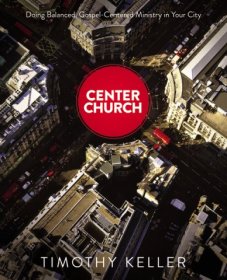
ImageTim Keller wrote a great book called Center Church: Doing Balanced, Gospel-Centered Ministry in Your City. In the introduction, he identifies the path to fruitfulness. The key insight is developing “theological vision,” a phrase he borrowed from Richard Lints (Gordon-Conwell professor, author of The Fabric of Theology).

Lints says, “The modern theological vision must seek to bring the entire counsel of God into the world of its time in order that its time might be transformed.”

And Keller provides eight questions for the development of a theological vision. This is the trajectory of the book overall.

  1. What is the gospel, and how do we bring it to bear on the hearts of people today?
  2. What is this culture like, and how can we both connect to it and challenge it in our communication?
  3. Where are we located – city, suburb, town, rural area – and how does this affect our ministry?
  4. To what degree and how should Christians be involved in civic life and cultural production?
  5. How do the various ministries in a church – word and deed, community and instruction – relate to one another?
  6. How innovative will our church be and how traditional?
  7. How will our church relate to other churches in our city and region?
  8. How will we make our case to the culture about the truth of Christianity?

Keller probing list of questions challenges shepherds to lead their sheep not in generally effective ministry, but in specifically effective theological vision – specific to the city. In other words, Keller’s list is all about contextualization (what else would one expect from Keller?).

He develops his own definition of theological vision, “It is a faithful restatement of the gospel with rich implications for life, ministry, and mission in a type of culture at a moment in history.”

The Hound

Thabiti Anyabwile posted a great section from Richard Baxter’s Christian Directory regarding our understanding of God’s love. It called to mind this amazing verse from Tolkien:

“As the hound follows the hare, never ceasing in its running, ever drawing nearer in the chase, with unhurrying and steady pace, so does God follow the fleeing soul by his divine grace. And though in sin or in human love, away from God it seeks to hide itself, divine grace follows after, unwearingly follows ever after, till the soul feels is pressure forcing it to turn to him alone in that never ending pursuit.”

(from The Neuman Press Book of Verse, quoted in To Change The World by James Davison Hunter. Tolkien is here commenting on Francis Thompson’s important mystical poem, “The Hound of Heaven”)