Category Archives: Uncategorized

How to Study the Bible: A Ten Step Approach

 Here is the short version of the ten steps, then explained more fully below. This approach is from Grant Osborne. (Other great resources are Kay Arthur’s How to Study Your Bible and How to Read the Bible for All Its Worth by Gordon D. Fee and Douglas Stuart.)

  1. Outline the book as a whole
  2. Line diagram of a specific passage
  3. Grammatical study based on line diagram
  4. Semantics study: meaning of key words based on context
  5. Syntactical study: what is the relationship between the words, phrases and ideas in the passage?
  6. Historical background: what internal evidence is provided about the original setting?
  7. Genre: OT narratives, poetry, prophetic, apocalyptic, NT narrative, epistle
  8. Historical interpretation: how has this passage been understood throughout church history?
  9. Doctrines: what doctrines are taught in this passage; what other parts of the Bible teach the same doctrine?
  10. Homiletical synthesis: what is the significance of this text for Christian living and for the church?

As I sat at my desk this morning I opened my Bible to Hosea 1 intending to read chapters 1-7. In this process there were two primary entities (though I’m tempted to include my coffee as a third). Those two entities were the text before me (Hosea) and me the reader. The writer Hosea and his mind are no longer present; the only record we have is this text he left behind.

My interaction with this text unfolds in a dynamic that Grant Osborne describes as a hermeneutical spiral, by which he means the movement back and forth between the reader and the text, leading to a probable understanding of the author/Author’s intended meaning. This process culminates in the reader’s understanding of the passage for the current context and significance for the church.

This back and forth between text and context is the essence of the hermeneutical spiral, and assumes the reality that the interpreter approaches the text with “pre-understandings.” The reader comes with his own language, culture, and assumptions to the text. The spiral describes the process by which the text challenges those pre-understandings and reshapes the mind of the interpreter, who then engages the text again with a new point of reference based on the text itself.

Osborne points out that this spiral occurs throughout the interpretive process, a process that he outlines in ten steps. These steps progress from inductive study to deductive study, from the exegetical to the theological.

  1. The first step is for the reader to outline the book as a whole, in order to understand the broad intent of the author in writing. This allows for clarity in understanding any particular portion of the book or letter that has been written.
  2. The second stage then narrows attention to a particular passage, completing a line diagram of that passage. A diagram of the passage allows the interpreter to identify the individual linguistic elements of the passage.
  3. The third stage is then a grammatical study based on the line diagram, in which the relationship between various phrases is explored. Here the interpreter could be looking for transitional words such as “and,” “but,” “yet,” “neither,” “thus,” “therefore,” and other words like these, which signal the nature of the relationship between the concepts before and after the word. The goal of grammatical study is to identity flow of thought. How are the various small thoughts in this passage linked together to fit within the author’s broader purpose?
  4. The fourth stage of the process is a semantics study (“semantics” is the study of word meaning). This zooms in still further to the individual words of the passage. What do the significant words in this passage mean? Here Osborne points to the significance of context, believing the meaning of any word is found in the congruence of two factors: the semantic field (possible meanings of a word) and the immediate context in which the word is used.
  5. The fifth stage is syntactical study, evaluating the order and relationship of words and phrases. This moves beyond grammatical study in terms of precision, based largely on the new understanding gained in studying word meaning.
  6. The sixth stage is to reflect on the background in which the text was produced. What internal evidence does the document give as to its author, purpose, location, and audience? This historical material will often shed further light on the intended meaning of various explanations or exhortations the author provides.

These first six stages comprise “general hermeneutics,” which could be applied in a “scientific” sort of manner toward any text. They are not unique functions of biblical hermeneutics.

  1. The seventh step begins to address the Bible in particular. This step will involve the process of biblical study and theology. Specifically, the interpreter will want to begin by evaluating the genre of the book in which he is working. It has been pointed out that genre establishes the rules for the language game. In order to interpret sensibly, one needs to understand the type of literature he is handling.For instance, when interpreting Hebrew poetry, a student will want to give particular attention to the feature of parallelism, how the lines are linked together and what the relationship between these pairings might be. When reading narratives, it is important to identify the various characters and to evaluate how they are each portrayed. Their actions and outcomes may form the theological lesson that the author has in mind. Apocalyptic and prophetic literature rely heavily on symbolism, imagery, and symbolic use of numbers. Interpretation must allow for symbolism to function as a literary feature without demanding a woodenly literalistic understanding of these symbols.Beyond genre, the student of Scripture will want to evaluate biblical theology, how the Bible develops theology from the Old Testament into the New Testament. How are the testaments related to one another generally? How does a particular New Testament writer employ quotations or observations from the Old Testament?
  2. The eighth step moves into the realm of applied hermeneutics, beginning with an evaluation of the way in which Christians have understood the text historically. Are there key debates the church has had regarding how to interpret this passage? What doctrines has the church historically understood to flow from this passage? An especially helpful tool for this step is the Scripture index in Historical Theology: An Introduction to Christian Doctrine by Gregg R. Allison.
  3. This sets up the interpreter for the ninth step, which is a study of particular doctrines that the text addresses (systematic theology). This sort of evaluation will help the reader place a particular passage within the teaching of the Bible as a whole. How do the concerns of this passage fit with similar or apparently contrasting concerns in another passage?
  4. These nine steps prepare the interpreter of Scripture for the final homiletical synthesis of all the material. The main question in this tenth step regards the significance of the text being studied for the current church context and Christian living. Thus, Osborne describes the spiral as a meaning-significance model, where the meaning of the passage as intended by its author yields the significance of the passage for the church today.

The interpreter has not reached his goal until this tenth step has been finished. This is where the interpretive process culminates. As has been said, the goal of hermeneutics is the sermon, meaning that interpretation is aimed at understanding the way the passage challenges the Christian in a contemporary setting. The sermon is aimed first at the reader and then at the congregation that the reader might address.

The spiral motif is helpful in that it points out the dynamic relationship between the reader and text, encouraging the interpreter to seek the confrontation of the text and to open herself to having reshaped thoughts and attitudes. At the same time, the spiral is limited in its hermeneutical guidance. The real interpretive process lies in the ten-step process that Osborne outlines, whereas the spiral simply describes a reality that should be unfolding throughout every step of the process.

When to Fear Your Sin: Six Symptoms of Soul-Destroying Sin

Of course all sin should be avoided, but some sins are particularly dangerous. In his classic The Mortification of Sin, John Owen gives six marks or symptoms of sins that will require “extraordinary remedies.” The whole book is simply an extended reflection on Romans 8:13, “If by the Spirit you put to death the deeds of body you will live.” But some deeds of the body don’t die easily. So, what are the marks and symptoms by which we can identify these sins that we should particularly fear?

1. Inveterateness. An inveterate sin is a persistent habit. These lusts may have weathered many a storm and prevailed under the display of a variety of ministries of the Word of God. If this is the case do you think it will prove an easy thing to dislodge such a room-mate, pleading to stay? Old and neglected wounds can prove to be fatal, and are always dangerous. How long has you sin clung so closely (Heb. 12:1)?

2. Secret pleas of the heart for the countenancing of itself. There is a blind optimism that ignores failures and pretends experiences of grace. For a man to gather up his good experiences with God, to call them to mind, to collect them, consider them, and to try to improve them is an excellent thing. To do it, however, to satisfy your conscience when your heart is convicted with sin is a desperate device of the heart that is in love with sin.

3. Frequency of success in sin’s seduction. When the will finds delight in a sin, even though it is not outwardly performed, the temptation is successful. A man may not go along with the sin as to the outward act, yet if he embraces the desire of it in his heart, the temptation has prevailed. If a lust frequently succeeds this way, it is a very bad sign.

4. When a man fights against his sin only because of the consequences or penalty due unto it. A man who only opposes the sin in his heart for fear of shame among men or eternal punishment from God would practice the sin if there were no punishment attending it. On the other hand, those who belong to Christ have the preciousness of communion with God and a deep-rooted hatred of sin as sin to oppose to all the workings of lust in their hearts. Consider Joseph: “How can I do this great wickedness and sin against God?”, my good and gracious God (Gen. 39:9).

5. When it is probable that trouble over a sin is a chastening punishment from God. This one may be harder to discern: how can someone know if there is the chastening hand of God behind his troubled heart? Examine your heart and ways. What was the state of your heart before you fell into the entanglements of the sin now troubling you? Were you negligent in duties or self-discipline? Is there the guilt of any great sin lying upon you that you have not repented of? If any of these are true of you, then you may be like Jonah, fast asleep while the storm of God’s anger surrounds you.

6. When your lust has already withstood particular dealings from God against it. Israel is often described in this condition (Isa. 57:17; 2 Chron. 36:15-16). God had dealt with them about their prevailing lust in several ways, by affliction and desertion; yet they held out against all. This is a sad condition, from which nothing but mere sovereign grace may set a man free, and no one in such a state should presume upon such deliverance.

It looks as if Owen is describing what we might call a habit. A habit is a routine action or thought process that has become so automatic that we often do it without rational premeditation, or sometimes even against rational premeditation. We may say in our heads, “I don’t want to do this. I shouldn’t do this. I will regret doing this.” And yet we proceed. Deeply ingrained habits are powerful, and when they are sinful they must be addressed with great fear and seriousness. They require “extraordinary remedies.”

What Next?
If you identify habits that reflect some or all of the six symptoms above, begin by confessing these sins to God and asking for his help to kill them. Your next step should be to acknowledge these sins to a brother or sister in Christ who is mature enough to help you further diagnose the sin and begin fighting against it to put it to death. Don’t assume you can fight embedded sin patterns alone without help. You can’t. This is why Paul says, “Brothers and sisters, if anyone is caught in any transgression, you who are spiritual should restore him in a spirit of gentleness. Keep watch on yourself, lest you too be tempted” (Galatians 6:2).

Counseling as Friendship: Lines of Help in the Local Church

friendshipcounselingCounseling is listening and responding to people, which seems simple enough. The difficult part is listening well and responding with wisdom. But these two aspects of counseling—listening and responding—are also the basic elements of friendship. You are a counselor for anyone you count as a friend. And likewise any counseling scenario demands the basic elements of friendship.


What does this look like in the local church? Say you’ve just met someone in your church who you quickly identify as being overly emotional, sensitive and co-dependent. Beyond that, it seems like she’s not aware of these things. What should you do? Well first, remember that she probably is aware of her troubles, but she might give them different names. Where you might say she is overly emotional, sensitive and co-dependent, she might instead say that she is traumatized from past experiences, has trouble trusting people’s good intentions, and is desperate to receive affection. We are usually aware of problem spots in our own personalities, but don’t usually diagnose them the same way that others would.

This is partly due to the fact that our lives are timelines not snapshots. The personalities we have are wired into us, but they are shaped in the context of life. This means that the person you think is overly emotional is speaking and acting out of some experiences. While this doesn’t excuse certain behaviors it may explain them, and at the same time may elicit compassion toward the struggler.

But what should you do next? If your first reaction is to recommend a professional counselor, please reconsider. Instead, let’s ask this question: How can you be used by God in helping someone like this with wisdom and love?

Paul writes a long letter to the church in Rome, full of theological and practical insight. Then near the end of the letter, he acknowledges that they likely already understand much of what he has just written.

I myself am satisfied about you, my brothers, that you yourselves are full of goodness, filled with all knowledge and able to instruct one another.” (Romans 15:14)

Because the church members in Rome were full of goodness and knowledge, they were capable to give counsel to one another. Or consider a similar comment Paul makes to the Colossians.

Let the word of Christ dwell in you richly, teaching and admonishing one another in all wisdom.” (Colossians 3:16)

When someone needs help and counsel, the local church should be the best place for them. Christ’s body should be full of people who know and love the “word of Christ,” the good news that we are broken people being helped by the Spirit to follow Jesus for the glory of God. People who know this gospel are the best kind of people to compassionately help strugglers find their way forward.

Many Christians have come to think that “serious problems” should only be dealt with by the professionals, by trained counselors or pastors. And while there may be a place for this, perhaps we have come to overly rely on professional counselors with the result that the church has atrophied in its ability to respond well to those in need of help.

When counsel is needed for problematic emotions, persistent sin struggles, relational conflict or complex decision-making, according to Paul, the first line of help is the relationships within the local congregation of believers.

In our church we think of responding to these challenging situations with four lines of help.

First line of help: friendships. Those with closest proximity to the struggler should be the first to help. Friends help first. Of course this can be intimidating for strugglers who would rather mask their struggles in front of friends and reveal them only to a counselor who remains at a safe distance. And it can also be intimidating for the friend, who might not feel equipped or competent to respond to the struggle.

Despite these challenges, every member of the church should take responsibility for the well-being of those around him or her. If your friends are struggling in marriage, don’t just tell them you’ll pray for them and leave it at that. Ask for details. Ask how you can help. Offer to meet consistently to pray together and to ensure that they are not giving up on working toward resolution.

Every Christian should be preparing to be a counselor—not a professional counselor of course, but at least a mature believer who can give wise help to those who are struggling. The author of Hebrews describes the mature as “those who have their powers of discernment trained by constant practice to distinguish good from evil” (Hebrews 5:14).

How can you help? Start with those two aspects of counseling: listen and respond. Listen thoughtfully, ask probing questions and think through what you’ve heard. Then respond after reflection and prayer. Respond with the word of Christ, the gospel as it applies to the particular challenge at hand. Of course there is a place for practical tips and insights gained from your own experience, but don’t start building a house until you’ve poured the foundation. Begin with the gospel and never lose sight of it as you go along.

Don’t underestimate the profound help that you may be able to offer to a struggler simply by listening thoroughly and responding with gospel hope.

Second line of help: care group leaders. We encourage all the members of our church to be involved in care groups where they can build spiritually helpful relationships. The leaders of these groups act as under-shepherds looking out for the safety and health of those in their group. So if someone in a care group is struggling, then in addition to the help of friends, the care group leader would be a wonderful next place to turn. Go to the leader and/or his wife to ask for prayer and to seek further counsel.

Third line of help: pastors and elders. Pastors and elders have often spent significant time preparing to counsel (reading and study) as well as actually giving counsel. Their knowledge and experience may be helpful when trying to sort out the complexities of certain struggles.

But members shouldn’t “hand off” their struggling friend to the pastor. Rather a pastor may be “drawn in” to give further counsel and perspective. The goal is that a struggler would not be relegated to finding help in only one office, but rather would have a dense network of relationships where they are finding help in a variety of forms from different people in the church.

Fourth line of help: professional counselors. I’m certainly not against the profession of counseling. Our church has good relationships with several Christian counselors and we occasionally recommend that a member go seek their help. But even then, we try to work together with the counselor to provide a spectrum of help, where friends in the church continue praying and encouraging, care-group leaders stay involved, and pastors and elders keep shepherding.

The professional counselor will play a different role than the person who is strictly a friend. Those who are struggling need a network of people around them who are each playing their role. The professional counselor will listen and respond at a different level than the typical friend, and yet the elements of both relationships are fairly similar. Which is to say that we must approach friends who are struggling not primarily as problems to be solved, but as people and as friends.

The main point here is that when it comes to the local church the bulk of counseling ministry should take place not in a counseling office but in the many relationships within the church. How are you preparing to be a counselor?

Resources for Preparing to be a Friend-Counselor

  • Side by Side: Walking With Others in Wisdom and Love, Ed Welch
  • The Pastor and Counseling: The Basics of Shepherding Members in Need, Jeremy Pierre and Deepak Reju
  • Instruments in the Redeemer’s Hands, Paul Tripp
  • When People are Big and God Is Small, Ed Welch

How to Meditate on the Providence of God (Four directions from John Flavel)

flavel-mystery-providenceCreation was God’s originating work; he brings things into being. Providence is his continuing relationship to creation. “By providence we mean the continuing action of God by which he preserves in existence the creation which he has brought into being, and guides it to his intended purposes for it.” (Millard Erickson, Christians Theology, 387). The Bible teaches that because God created the world, he reigns over it as king. “Our God is in the heavens; he does all he pleases” (Ps. 115:3).

The providence of God is usually explained as having two aspects. First, God preserves the existence of creation (sustaining providence), and second, God is actively guiding and directing the course of human events to fulfill the purposes which he has in mind. “He changes times and seasons; he removes kings and sets up kings” (Dan 2:21).

God is the sovereign king over the lives of individuals. After receiving the child Samuel from the Lord, Hannah gives thanks and says, “The Lord kills and brings to life; he brings down to Sheol and raises up. The Lord makes poor and makes rich; he brings low, he also exalts” (1Sam 2:6-7). And the Lord says to the prophet Jeremiah, “Before I formed you in the womb I knew you, and before you were born I consecrated you; I appointed you a prophet to the nations” (Jer 1:5). The Lord is even sovereign over things that seem like accidental occurrences. “The lot is cast into the lap, but the decision is wholly from the Lord” (Proverbs 16:33). Even the sinful actions of humans are part of God’s providential working. Probably the most notable instance of this is the crucifixion of Jesus, which Peter attributed both to God and to sinful men, “This Jesus, delivered up according to the definite plan and foreknowledge of God, you crucified and killed by the hands of lawless men” (Acts 2:23).

Knowing what providence is, how can the Christian go about meditating on the providence of God? John Flavel (c. 1627-1691) began his excellent book The Mystery of Providence this way, “It is the duty of saints, especially in time of straits, to reflect upon the performances of Providence for them in all the states and through all the stages of their lives” (based on Psalm 57:2). In the second part of his book, Flavel gives four directions for reflecting on the performances of providence for us.

First, labor to get as full and thorough a recognition as you are able of the providence of God concerning you from first to last.

  • There is not such a pleasant history for you to read in all the world as the history of your own lives.
  • Let your meditation be intensively full. Do not let your thoughts swim like feathers upon the surface of the waters, but sink like lead to the bottom.
  • You may look upon some providences once and again, and see little or nothing in them; but look ‘seven times,’ that is, meditate often on them, and you will see their increasing glory.

Second, in all your observations of providence have special respect to that Word of God which is fulfilled and made good to you by them.

  • The Word tells you that it is your wisdom and interest to keep close to its rules and the duties it prescribes (Deut 4:5-6). How have you seen the events of providence prove this true?
  • The Word tells you that your departure from the way of integrity and simplicity, to make use of sinful policies, shall never profit you (1 Sam 12:21; Prov 3:5). How have you seen the events of providence prove this true?
  • The Word prohibits your trust and confidence in the creature (Ps 146:3). It tells us that it is better to trust in the Lord (Ps 118:8). How have you seen the events of providence prove this true?
  • The Word assures us that sin is the cause and inlet of affliction and sorrow (Num 32:23). How have you seen the events of providence prove this true?
  • The Word of promise assures us that whatever wants or straits the saints fall into, their God will never leave them nor forsake them (Heb 13:5; Ps 91:15). How have you seen the events of providence prove this true?
  • The Word of God is the only support and relief to a gracious soul in the dark day of affliction (Ps 119:50, 92, 2 Sam 23:5). How have you seen the events of providence prove this true?
  • The Word tells us that there is no better way to improve our estates than to lay them out with a cheerful liberality for God, and that our withholding our hands when God and duty calls to distribute will not be for our advantage (Prov 11:24, 25; 19:17; Isa 32:8). How have you seen the events of providence prove this true?
  • The Word assures us that the best expedience for a man to settle his own interest in the consciences and affections of men is to direct his ways so as to please the Lord (Prov 16:7). How have you seen the events of providence prove this true?
  • The Word tells us that the best way to gain inward peace and tranquility of mind under puzzling and disturbing troubles is to commit ourselves and our case to the Lord (Ps 37:5-7; Prov 16:3). How have you seen the events of providence prove this true?

Third, in all your reviews and observations of providence, be sure that you eye God as the author or orderer of them all.

  • In all the sad and afflictive providences that befall you, eye God as the author and orderer of them also. Set the grace and goodness of God before you in all afflictive providences. Eye the wisdom of God in all your afflictions. Set the faithfulness of the Lord before you under the saddest providences.
  • I see my God will not lose my heart, if a rod can prevent it. He would rather hear me groan here than howl hereafter. His love is judicious, not fond. He consults my good rather than my ease.

Lastly, work up your hearts to those frames, and exercise those affections which the particular providences of God that concern you call for.

  • As there are various affections planted in your souls, so there are various graces planted in those affections, and various providences appointed to draw forth and exercise these graces.
  • Let us suppose the most afflicted and calamitous state a Christian can be in, yet why should sad providences make him lay aside his comforts in God, when those are but for a moment, and these eternal (2 Cor 4:17)?
  • Mortify your inordinate affections to earthly things. This makes providences that deprive and cross us so heavy. Mortify your opinion and affection, and you will lighten your affliction. It is strong affection that makes strong affliction.
  • Under all providences maintain a contented heart with what the Lord allots you, be it more or less of the things of this world. This grace must run parallel with all providences. Learn how to be full, and how to suffer want, and in every state to be content (Phil 4:11, 12).


These four directions are taken from John Flavel, The Mystery of Providence, chapter 9.

Where Are Your Sins?

Where are your sins? The question must be answered by all. Those who refuse the legitimacy of the question deny the fundamental flaw of humanity.

J. C. Ryle posed that question at the end of a sermon that he began with the point obvious to most of us: you have many sins. “Every ten years of your life your have sinned, at the lowest computation, more than one hundred thousand sins.” (2 sins per hour, 15 hours per day, remembering that thoughts, words, and deeds can all be offensive to God).

He proceeds in this way:

  1. You have many sins
  2. It is of the utmost importance to have our sins cleansed away
  3. You cannot cleanse away your own sins
  4. The blood of Jesus Christ can cleanse away all your sins
  5. Faith is absolutely necessary, and the only thing necessary, in order to give you an interest in the cleansing blood of Christ.

“The atoning blood of the Son of God is the grand exhibition of God’s love toward sinners.”  In the blood of Jesus, Ryle says, we see the love of God most clearly. Or as John Owen puts it, “In the pouring out of his love, there is not one drop that falls to us apart from the Lord Christ.” [1]

Ryle concludes by asking, “Where are your sins?” There is no important question for us to settle in our hearts and minds. “I tell you that at this moment there are only two places in which your sins can be, and I defy the wisdom of the world to find out a third. Either your sins are upon yourself, unpardoned, unforgiven, uncleansed, inducing misery upon yourself. Or else your sins are upon Christ, taken away, forgiven, blotted out and cleansed away.” So the question stands, where are your sins?

The Christian must hear this question and immediately say to himself, “Cling to Christ.” Our sins are decidedly upon him, so they must no longer bring condemnation (Romans 8:1). Guilt leading to repentance must be followed by joy and a sense of freedom. But guilt leading to despair has no ground in reality for those whose sins are upon Christ.

The troubling anxiety caused by awareness of sin must be countered not by suppressing  guilt or by recycling prayers of repentance, but rather by clinging to Christ and recalling the greatness of his mercy (Romans 5:20).


[1] John Owen, Communion With God (Christian Heritage, 2007), 57.

Appointed to Good Works (thoughts on reading Titus)

I’ve been reading through the apostle Paul’s short letter to Titus over the past week. Last year I actually read through the Bible, but as many have also experienced, the project left little time for deep thought. So this year, I started the project of reading through each book of the Bible twenty times. Titus is the fifth book I’ve gotten to since January 1, 2016. Since I’m doing the short ones first.

As I was reading Titus this week, I was struck by the emphasis on good works from beginning to end (godliness in 1:1, devoted to good works, 3:14).

In the twin peaks of the gospel sections (2:11-14 and 3:4-8), salvation is portrayed not in terms of the substitution of Christ’s death in our place, nor even in terms of erasure of guilt. There’s no mention of forgiveness. But rather, the “salvation that has appeared” is portrayed as an appointment unto a new way of life (2:11-12).

We were brought out of lawlessness in order to be pure and zealous for good works (2:14). And the whole “gospel saying” of 3:4-7 is aimed at provoking devotion to good works (3:8, “…so that those who have believed in God may be careful to devote themselves to good works”).

Every major piece of the letter revolves around the exercise of good works. The elder’s way of life should be above reproach. The way of life of the false teachers is denying God by their works; they are unfit for any good work (1:16). The various demographics of 2:1-10 should each learn what kind of actions are in accord with sound doctrine in their particular sphere (2:1, cf. 1:1). And so on.

So what? I think Paul has a few different gears for speaking about the effects of salvation. Other letters from his hand seem to focus more on penal substitution, which I think constitutes the core of the gospel message. But Paul also seems comfortable here in Titus to speak of salvation largely as an appointment to good works.

The challenge is to try to capture this balance in our preaching and teaching, giving the weight to whatever passage we’re in, but also acknowledging the other lenses through which the gospel might be viewed.

Oddly Symmetrical Qualities in Jesus

Christus_Ravenna_MosaicA friend pointed out to me, “God has wired us with personalities that are double edge swords, as it were. Each sword has a side to defend and deliver and another that can bring destruction. The key is building on the good and mitigating the weak. I think we underestimate the complexity of our human personalities as well as the personality of Jesus.” It’s true. Our experience of personality traits usually finds that particular strengths also have associated weaknesses. In this sense our personalities are asymmetrical.

But Jesus has a striking symmetry of personality. His gentleness and tenderness toward the woman in Matthew 9—“Take heart, daughter; your faith has made you well”—is oddly matched by boldness and severity in Matthew 23, where he excoriates the Pharisees for their religious oppression. Warmth in the one case, force in the other. Perfectly combined in one person.

This calls for reflection on the nature of our personalities. Where we see particular strengths, we must be careful to cultivate Christlikeness in the associated weakness.

It’s also a caution for us to be tethered to Scripture in our thoughts about Jesus. The way we conceive of Jesus will more or less unfold into a blueprint for living. If we think of him as a social revolutionary, or a religious genius, or a wise sage, or merely forgiver of sins, in each case our way of life will reflect our thoughts about him.

So we must not be too narrow in our thoughts of him. He is at least all four of these things (revolutionary, sage, genius, forgiver) but also much more. Our thoughts of him must be always expanding and never contracting.

Five Ways to Preach to the Heart

Tim Keller describes preaching to the heart as preaching affectionately, imaginatively, practically, wondrously and Christocentrically. Keller’s book Preaching: Communicating Faith in an Age of Skepticism will be released next month.
The notes below are from the fourth and final lecture in a series on preaching Keller did at RTS in November 2014 (see notes from lecture 1, lecture 2, and lecture 3).

[The notes pick up at the seventeen-minute mark after the introductory comments about the nature of “the heart” from a biblical perspective.]

Preaching to the Heart (17:00)

1. Preach Affectionately

The main way to preach to the heart is to preach from the heart. There are only three possible ways to preach: 1) flat affect, unengaged emotionally 2) acting, performance of emotions, 3) engaged heart, genuine emotions.

  • Know your material so well that you are able to preach from the heart, so you won’t be distracted by the fact that you don’t know what to say next. You must not be tied to your notes. You can’t look down at your notes and read to your audience about how wonderful Jesus is.
  • Watch the subtext, the non-verbal message that comes across because of your attitude. Derek Thomas says one of the possible subtexts is “I read Louis Berkhoff this week and I want you to know it.” The two subtexts to be careful about: 1) “Aren’t we great?” We believe this and not that. 2) “Don’t you think I’m great?” Someone who tries very hard to look good and confident. 3) The subtext should be, “Isn’t Jesus great?”
  • Have a great prayer life. When you talk about the holiness or wisdom or love of God, the people ought to sense your awe of his holiness, dependence on his wisdom and delight in his love. You should be tasting the food you’re feeding the children. When you talk about God, they should see you yearning for him. This genuine awe/dependence/delight is developed through prayer.

2. Preach Imaginatively (28:00)

The heart is more affected by illustrations than propositions in general. Jonathan Edwards didn’t tell many stories but used metaphors all the time. Stories elicit emotions, but metaphors both instruct and affect. “Turn the ear into any eye” (Spurgeon).

Example 1. Proposition: Your good deeds cannot save you. Metaphor: Your good deeds cannot save you, any more than a spider web can stop a falling rock. This appeals to the senses because you’ve seen this kind of thing happen. It informs the mind, but also affects the heart.

Example 2. Cain in Genesis 4. God says, “Sin is crouching at the door.” Rather than just saying, “Sin wants to destroy you,” God says, “Sin is like an animal crouching at the door ready to spring on you in attack.”

Example 3. in 2 Samuel 12 Nathan the prophet tells King David the story of the rich man who stole the poor man’s beloved lamb. The most direct sermon illustration/application in the history of the world. “You are the man!” (v. 7)

Example 4. Murder on the Orient Express (Agatha Christie). The occupants of the railway car were all accomplices to the murder. If we wonder what’s wrong with the world, we must conclude, “We’re all in on it.”

3. Preach Practically (39:00)

Dan Doriani has written the most comprehensive books on how to apply. Mark Dever has a lot of great stuff on application 9Marks site. There is some debate on the extent to which we should apply the text to begin with. For instance, Andy Stanley says in Preaching for a Change says we shouldn’t do expositional preaching, but rather we should lift up a human need and then bring in the Bible to address that human need. Stanley’s concern (appropriate) is that often people who stress expositional preaching spend time on exegesis but do not spend enough thought effort on helpful application. Stanley’s solution to the problem may not be right, but he’s addressing a real problem.

Example. Once when preaching on the topic of honesty, Keller called up a few people and asked what common lies were in their field of work. Political lies: “I’d love to go but I’ll be out of town that day.” Or, “I think your writing is too sophisticated for our readers,” when really it is terrible. Business lies. Don’t say publicly that things are fine when everyone on staff know they are not.

  • Be careful your applications don’t all have the same personality. They can’t all be warning. They can’t all be comfort/encouragement. Sometimes, we should beware of this, that our applications are guided more by our personalities than they are by the text. But application should be guided by the text.
  • Think of different kinds of people. What in this text for a non-Christian? What’s in this text for a mature believer? What’s in this text for a immature, struggling, or new Christian?
  • Get into dialogs. Imagine the objections to your application and tease it out in your application. “Some of you might think….” When it comes to application, this is a good place to go off script…when you sense a pliable moment.

4. Preach Wondrously (47:25)

J.R.R. Tolkien wrote an essay On Fairy Stories trying to explain the appeal of fantasy writing. The reason we can’t get enough of such stories is that there is something in the human heart that longs for stories where people 1) escape from time, 2) escape from death 3) have love without parting, 4) have communication with non-human beings, and 5) where good finally triumphs over evil.

If Jesus was raised from the dead, then all these things Tolkien says we long for will be our experience. Do you preach as if these things are realities? The gospel fulfills the deepest longings of the human heart.

For non-Christians, you might point out, “Don’t you at least want this to be true?” For Christians, urge them to live as if these wonderful truths are true.

5. Preach Christocentrically (53:00)

Kathy often says that when I get to Jesus the sermon goes from being a Sunday school lecture to being a sermon.

Example. The Beatitudes describe not different groups of people but rather the complete portrait of what every Christian should be. Lloyd-Jones said in one sense this is how you become a Christian. But how’s it possible? (following Iain Duguid a bit…)

  • Why is it possible for us to be rich as kings? Because Jesus was stripped and became poor.
  • Why is it possible for us to be comforted? Because Jesus cried mourned and cried in the garden in the dark and on the cross.
  • Why is it possible for us to be filled with righteousness? Because Jesus said, “I thirst.”
  • Why is it possible for us to inherit the earth? Because Jesus became the meek Lamb of God.

When you get to Jesus, people stop taking notes and the Sunday school lesson becomes a sermon.

Keller’s Six Ways to Preach Christ

Tim-Keller-3These notes are from Keller’s lecture “How to Preach the Gospel Every Time,” which is the third in his series on preaching at Reformed Theological Seminary (see my notes on Part 1 and Part 2). The third point in this lecture is Keller’s list of six ways to preach Christ. These directives are especially helpful for preachers when approaching Old Testament passages. No doubt much of this will also appear in Keller’s forthcoming Preaching: Communicating Faith in an Age of Skepticism (which Amazon already lists as a #1 Best Seller though it won’t be released until June).

Introduction

Many others have addressed this topic already.

The basic idea is this, that every time you preach in any text of the Bible you must not only expound the text in its historical context, but you must show how the text fits into the canonical context, which is to say how it points us to Christ and salvation, which is what the canon is all about. Therefore you must always, no matter where you are in the Bible, show how the text tells us about or points to Christ and his salvation. This basic idea used to be controversial. But in part due to all these works that have been written in the past generation, there is less controversy. This is a more accepted thesis these days. So I am not trying to chart new territory, but rather coming as a practitioner giving my insights on this.

1. Why we should preach Christ from every text (3:40)

It honors the nature of Scripture

  • Luke 24:25, 44. Jesus is saying, “You knew all the sub-stories of the Bible but you didn’t know the story of the Bible.” For example, a chapter in a Dickens novel makes very little sense apart from the context of the novel as a whole narrative arc. The narrative arc of the Bible is creation, fall, promises to Israel, Jesus as fulfillment of the promises, the promises extend to all nations rather than just one nation, the promises will culminate in new creation.
  • Edmund Clowney: “If you tell a particular Bible story without putting it into the Bible story about Christ, you actually change the meaning of the particular story for us. Because the story becomes a moralistic exhortation to try harder to live up to the example of the person in the story instead of a call to live by faith in Christ.”

It fits the nature of human beings

  • We are so deeply oriented to self-salvation, that if you preach on a text and the lesson of the text is “Thou shalt not…” then unless you emphatically put that into the context of the whole Bible pointing to salvation in Jesus Christ, then it will be heard essentially as a moralistic lesson that if you basically live a good life then God will bless you.
  • When you slide back into thinking that your justification is based on you sanctification, two things happen: 1) Motivation is all self-centered, fear and pride. Fear of punishment, pride thinking that you’re better than most. Thus nurtures the essence of sin in the heart of your religious life. 2) Religious experience becomes a yo-yo. When you’re having a good week you have a big head, and when you’re having a bad week you beat yourself up in self-hating.\
  • Preaching Christ, rooting motivation in Christ fulfilled righteousness as opposed to our self-salvation, then constantly pulls us back from

2. Two Mistakes to Avoid (13:20)

First, You can preach a text about Jesus without actually preaching the gospel, which often happens in the NT

Example of two sermons preached on Mark 5:1-20, the healing of the demoniac.

The first sermon: Jesus saves this man: liberates the man in chains, bring the isolated man into community, clothes the naked man, stopped is anguished cries, and puts his life back together. The key point: Come to Jesus with your problems. Whatever your problem is, come to Jesus and he can make it right. Followed by stories of people whose lives have been put back together (exconvicts, etc.)

The second sermon: The demoniac is not a type of people with unusually bad problems. But rather he is a picture of us because we’re sinner and thus all enslaved, isolated, in the darkness, crying out with unfulfilled longings. The demoniac is a type of all people in sin. Why can Jesus forgive this man? At the end of Jesus’ life we see him stripped naked on the cross, a prisoner, isolated and alone outside the gate, crying out in agony of abandonment. Jesus was able to heal and forgive because he himself went to the cross and bore all those things. He was stripped so we can be clothed, etc.

Assessment: The second sermon makes the gospel really clear. Not that the first sermon wasn’t true. But you could walk away from the first thinking if you really surrender then God will make everything okay. But that’s only half true. We need to hear the message of substitution which is the heart of salvation in Jesus Christ.

Second, there is a way of preaching Christ without actually preaching the text, which often happens in the OT (20:20)

One of the reasons we miss how often the Bible talks about justice, oppression, etc. is because we jump to Jesus too quickly from the Old Testament and overlook the context of the original writing. Amos really is about justice and compassion for the poor. Of course this is fulfilled in Jesus, but this does not diminish the way that Amos actually condemns injustice and oppression in Israel and surrounding nations.

Interlude (23:15)

Charles Spurgeon on preaching Christ. Sermon 242, March 13, 1859. Christ Precious to Believers.

“I often hear sermons that are very learned…but there is not a word about Christ in those sermons. I say, ‘They have taken away my Lord and I do not know where they have laid him.’” Spurgeon goes on to tell the story of a Welsh preacher who heard a young preacher give a sermon with no Christ in it. The older man pointed this out to him, and explained that every text has some road to Christ, just as every town, village or hamlet has a road to London. And so from every text in Scripture there is a road to the metropolis of the Scriptures, which is Christ.

Keller notes, every text has a major point, a main street in the village. This is the main point in the original context the author was trying to get across. But the fact is that there is a road out of town that leads to London.

3. Six Ways to Preach Christ (28:50)

  1. From every part of the Bible
    • He is the hope of the patriarchs, rock of Moses, the fulfiller of the law (ceremonial and moral), the true temple/priest/sacrifice, the commander of the Lord’s hosts, the divine warrior, the true Israel, the sweet singer of Israel, the true wisdom of God.
    • There’s a certain sense in which every chunk of the Bible looks to Jesus in a particular way. And you need to know how each chunk looks to Jesus
    • The Dillard/Longman Old Testament Survey has a section at the end of each book called “Approaching the New Testament” which is an excellent compass in this regard. Iaian Duguid’s commentaries and Christopher Wright’s commentaries are not afraid to point to Christ.
  2. From every theme of the Bible
    • Don Carson thinks there are about 20 inter-canonical themes that run through both OT and NT. Some of them are kingdom, covenant, exile, God vs. Idols, face/presence of God, rest/Sabbath, justice/judgment, shalom/peace, righteousness/nakedness, marriag/faithfulness, image/likeness, wisdom/word.
    • Every one of these themes climaxes in Jesus Christ. For example…
      • Kingdom. Jesus is the true king, and the preaching point is that unless you are under the true king you are a slave. Every other king is a tyrant. As Bob Dylan said, “Everybody is serving somebody. You gotta serve somebody.” Something is the king of your life. If not the true king, then you are a slave.
      • Covenant. We are made for relationship. A relationship always has law and love in it— binding solemn promise on the one hand, but relationship on the other hand. God enters into covenant with his people. But the question is this: Is the covenant with God conditional or unconditional? Ray Dillard says this is one of the main narrative tensions that drives the OT. The covenant seems both conditional and unconditional in the OT. Always faithful God, yet dependent on Israel’s obedience. The entire OT is on gigantic plot thickening, in which the main question is can we have relationship with God? And is that conditional or unconditional? And when you get to the cross, you finally see the answer to both questions is yes. God’s love is unconditional through Christ,
      • Exile. N.T. Wright makes this the major theme of the Bible. That Jesus was exiled and rejected outside the gate. Exiled so we could be brought home.
  1. From every major figure in the Bible (39:45)
    • Jesus is the true and better. John Calvin in his introduction to the New Testament, “He Christ is Isaac. Christ is Jacob, the watchful shepherd. Christ is the good and compassionate brother Joseph. Jesus is the great sacrificer and bishop Melchizedek. Jesus is the sovereign lawgiver Moses. He is the faithful captain and guide Joshua….”
  2. From every deliverance storyline in the Bible.
    • Every one actually reflects what Jesus did in the ultimate act of deliverance. So you can go to any prophet, priest, judge or deliverer and from all of them there will be a road to Jesus.
  3. From every single command in the Bible
    • How Jesus Transforms the Ten Commandments (Edmund Clowney) shows that when Paul in Ephesians 5 calls husbands to Christ-like love and faithfulness to wives, this is the fulfillment of “Don’t commit adultery.” Here’s how you don’t commit adultery, by reflecting the spousal love of Jesus Christ.
  4. From Jesus’ varied reflections
    • [skipped explanation because of time]


Sinclair Ferguson. Some of the best preachers of Christ don’t really know how they do it. “Perhaps most outstanding preachers of the Bible and of Christ in all of Scripture are so instinctively.” They might say something like, I don’t really know how I got Jesus out of this, and yet I don’t really know how you couldn’t get Jesus out of it.


Tremper Longman thinks reading the Bible is a little bit like watching the movie The Sixth Sense. Once you learn the key fact at the end of the movie, you can’t ever watch the movie the same way again. You can’t possibly ignore the key fact. Similarly with the Bible, once you learn of Jesus you can’t read the rest of the Bible without seeing him (whether or not he fits into one of the technical categories).


The Gospel Equation

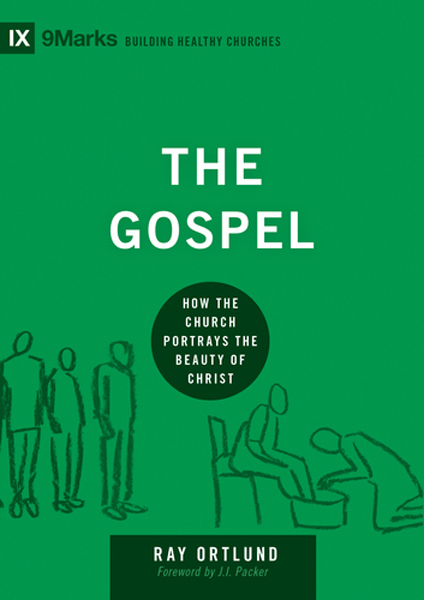
9781433540837I’ve recently finished reading Ray Ortlund’s new book, The Gospel: How the Church Portrays the Beauty of Christ. This book is a gold mine of thoughtful reflection on the ways in which the church should express gospel happiness and holiness. One memorable bit of advice Ortlund provides is this:

The family of God is where people behave in a new way. I think of it with a simple equation: gospel + safety + time. The family of God is where people should find lots of gospel, lots of safety, and lots of time. In other words, the people in our churches need:

    • multiple exposures to the happy news of the gospel from one end of the Bible to the other;
    • the safety of non-accusing sympathy so that they can admit their problems honestly; and
    • enough time to rethink their lives at a deep level, because people are complex and changing is not easy.

In a gentle church like this, no one is put under pressure or singled out for embarrassment. Everyone is free to open up, and we all grow together as we look to Jesus. Behaving well in the household of God sets a tone defined by gospel + safety + time for everyone. This is what sets a church apart as a new kind of community.

He goes on to point out, “The goal is not to make the church safe for sin; it’s to make it safe for confession and repentance.” Of course, the church itself takes time to change, and must grow incrementally into this type of community. Ortlund’s book is excellent help and motivation toward such change.