Author Archives: niklingle

Unknown's avatar

About niklingle

I have a beautiful wife Stacy and am one of the pastors at Christ Covenant Church in Raleigh, NC. I have a degree in Humanities and a Master of Divinity. While we don’t have any children, we’re currently waiting to bring home our adopted child from Ethiopia. In those rare moments that I’m not reading, I enjoy hiking or kayaking with Stacy.

Keller’s Six Ways to Preach Christ

Tim-Keller-3These notes are from Keller’s lecture “How to Preach the Gospel Every Time,” which is the third in his series on preaching at Reformed Theological Seminary (see my notes on Part 1 and Part 2). The third point in this lecture is Keller’s list of six ways to preach Christ. These directives are especially helpful for preachers when approaching Old Testament passages. No doubt much of this will also appear in Keller’s forthcoming Preaching: Communicating Faith in an Age of Skepticism (which Amazon already lists as a #1 Best Seller though it won’t be released until June).

Introduction

Many others have addressed this topic already.

The basic idea is this, that every time you preach in any text of the Bible you must not only expound the text in its historical context, but you must show how the text fits into the canonical context, which is to say how it points us to Christ and salvation, which is what the canon is all about. Therefore you must always, no matter where you are in the Bible, show how the text tells us about or points to Christ and his salvation. This basic idea used to be controversial. But in part due to all these works that have been written in the past generation, there is less controversy. This is a more accepted thesis these days. So I am not trying to chart new territory, but rather coming as a practitioner giving my insights on this.

1. Why we should preach Christ from every text (3:40)

It honors the nature of Scripture

  • Luke 24:25, 44. Jesus is saying, “You knew all the sub-stories of the Bible but you didn’t know the story of the Bible.” For example, a chapter in a Dickens novel makes very little sense apart from the context of the novel as a whole narrative arc. The narrative arc of the Bible is creation, fall, promises to Israel, Jesus as fulfillment of the promises, the promises extend to all nations rather than just one nation, the promises will culminate in new creation.
  • Edmund Clowney: “If you tell a particular Bible story without putting it into the Bible story about Christ, you actually change the meaning of the particular story for us. Because the story becomes a moralistic exhortation to try harder to live up to the example of the person in the story instead of a call to live by faith in Christ.”

It fits the nature of human beings

  • We are so deeply oriented to self-salvation, that if you preach on a text and the lesson of the text is “Thou shalt not…” then unless you emphatically put that into the context of the whole Bible pointing to salvation in Jesus Christ, then it will be heard essentially as a moralistic lesson that if you basically live a good life then God will bless you.
  • When you slide back into thinking that your justification is based on you sanctification, two things happen: 1) Motivation is all self-centered, fear and pride. Fear of punishment, pride thinking that you’re better than most. Thus nurtures the essence of sin in the heart of your religious life. 2) Religious experience becomes a yo-yo. When you’re having a good week you have a big head, and when you’re having a bad week you beat yourself up in self-hating.\
  • Preaching Christ, rooting motivation in Christ fulfilled righteousness as opposed to our self-salvation, then constantly pulls us back from

2. Two Mistakes to Avoid (13:20)

First, You can preach a text about Jesus without actually preaching the gospel, which often happens in the NT

Example of two sermons preached on Mark 5:1-20, the healing of the demoniac.

The first sermon: Jesus saves this man: liberates the man in chains, bring the isolated man into community, clothes the naked man, stopped is anguished cries, and puts his life back together. The key point: Come to Jesus with your problems. Whatever your problem is, come to Jesus and he can make it right. Followed by stories of people whose lives have been put back together (exconvicts, etc.)

The second sermon: The demoniac is not a type of people with unusually bad problems. But rather he is a picture of us because we’re sinner and thus all enslaved, isolated, in the darkness, crying out with unfulfilled longings. The demoniac is a type of all people in sin. Why can Jesus forgive this man? At the end of Jesus’ life we see him stripped naked on the cross, a prisoner, isolated and alone outside the gate, crying out in agony of abandonment. Jesus was able to heal and forgive because he himself went to the cross and bore all those things. He was stripped so we can be clothed, etc.

Assessment: The second sermon makes the gospel really clear. Not that the first sermon wasn’t true. But you could walk away from the first thinking if you really surrender then God will make everything okay. But that’s only half true. We need to hear the message of substitution which is the heart of salvation in Jesus Christ.

Second, there is a way of preaching Christ without actually preaching the text, which often happens in the OT (20:20)

One of the reasons we miss how often the Bible talks about justice, oppression, etc. is because we jump to Jesus too quickly from the Old Testament and overlook the context of the original writing. Amos really is about justice and compassion for the poor. Of course this is fulfilled in Jesus, but this does not diminish the way that Amos actually condemns injustice and oppression in Israel and surrounding nations.

Interlude (23:15)

Charles Spurgeon on preaching Christ. Sermon 242, March 13, 1859. Christ Precious to Believers.

“I often hear sermons that are very learned…but there is not a word about Christ in those sermons. I say, ‘They have taken away my Lord and I do not know where they have laid him.’” Spurgeon goes on to tell the story of a Welsh preacher who heard a young preacher give a sermon with no Christ in it. The older man pointed this out to him, and explained that every text has some road to Christ, just as every town, village or hamlet has a road to London. And so from every text in Scripture there is a road to the metropolis of the Scriptures, which is Christ.

Keller notes, every text has a major point, a main street in the village. This is the main point in the original context the author was trying to get across. But the fact is that there is a road out of town that leads to London.

3. Six Ways to Preach Christ (28:50)

  1. From every part of the Bible
    • He is the hope of the patriarchs, rock of Moses, the fulfiller of the law (ceremonial and moral), the true temple/priest/sacrifice, the commander of the Lord’s hosts, the divine warrior, the true Israel, the sweet singer of Israel, the true wisdom of God.
    • There’s a certain sense in which every chunk of the Bible looks to Jesus in a particular way. And you need to know how each chunk looks to Jesus
    • The Dillard/Longman Old Testament Survey has a section at the end of each book called “Approaching the New Testament” which is an excellent compass in this regard. Iaian Duguid’s commentaries and Christopher Wright’s commentaries are not afraid to point to Christ.
  2. From every theme of the Bible
    • Don Carson thinks there are about 20 inter-canonical themes that run through both OT and NT. Some of them are kingdom, covenant, exile, God vs. Idols, face/presence of God, rest/Sabbath, justice/judgment, shalom/peace, righteousness/nakedness, marriag/faithfulness, image/likeness, wisdom/word.
    • Every one of these themes climaxes in Jesus Christ. For example…
      • Kingdom. Jesus is the true king, and the preaching point is that unless you are under the true king you are a slave. Every other king is a tyrant. As Bob Dylan said, “Everybody is serving somebody. You gotta serve somebody.” Something is the king of your life. If not the true king, then you are a slave.
      • Covenant. We are made for relationship. A relationship always has law and love in it— binding solemn promise on the one hand, but relationship on the other hand. God enters into covenant with his people. But the question is this: Is the covenant with God conditional or unconditional? Ray Dillard says this is one of the main narrative tensions that drives the OT. The covenant seems both conditional and unconditional in the OT. Always faithful God, yet dependent on Israel’s obedience. The entire OT is on gigantic plot thickening, in which the main question is can we have relationship with God? And is that conditional or unconditional? And when you get to the cross, you finally see the answer to both questions is yes. God’s love is unconditional through Christ,
      • Exile. N.T. Wright makes this the major theme of the Bible. That Jesus was exiled and rejected outside the gate. Exiled so we could be brought home.
  1. From every major figure in the Bible (39:45)
    • Jesus is the true and better. John Calvin in his introduction to the New Testament, “He Christ is Isaac. Christ is Jacob, the watchful shepherd. Christ is the good and compassionate brother Joseph. Jesus is the great sacrificer and bishop Melchizedek. Jesus is the sovereign lawgiver Moses. He is the faithful captain and guide Joshua….”
  2. From every deliverance storyline in the Bible.
    • Every one actually reflects what Jesus did in the ultimate act of deliverance. So you can go to any prophet, priest, judge or deliverer and from all of them there will be a road to Jesus.
  3. From every single command in the Bible
    • How Jesus Transforms the Ten Commandments (Edmund Clowney) shows that when Paul in Ephesians 5 calls husbands to Christ-like love and faithfulness to wives, this is the fulfillment of “Don’t commit adultery.” Here’s how you don’t commit adultery, by reflecting the spousal love of Jesus Christ.
  4. From Jesus’ varied reflections
    • [skipped explanation because of time]


Sinclair Ferguson. Some of the best preachers of Christ don’t really know how they do it. “Perhaps most outstanding preachers of the Bible and of Christ in all of Scripture are so instinctively.” They might say something like, I don’t really know how I got Jesus out of this, and yet I don’t really know how you couldn’t get Jesus out of it.


Tremper Longman thinks reading the Bible is a little bit like watching the movie The Sixth Sense. Once you learn the key fact at the end of the movie, you can’t ever watch the movie the same way again. You can’t possibly ignore the key fact. Similarly with the Bible, once you learn of Jesus you can’t read the rest of the Bible without seeing him (whether or not he fits into one of the technical categories).

 

Convincing Skeptics of Christianity

Timothy_KellerAdaptation of gospel communication to persuade secular skeptics is a skill that Tim Keller has carefully developed. Those who want to communicate the gospel in the current cultural milieu would do well to listen to Keller’s advice in this areas. Below are notes from his lecture on his topic, the second in a series on preaching.

Introduction

There are three components to good preaching (and a fourth…but not really). You must preach biblically, attractively and powerfully [from the first lecture: What is Good Preaching?]. The fourth is to preach Christ, but this is actually the only right means to doing the other three. You will never really restructure the affections of the heart apart from preaching Christ.

The goal of this lecture: How to convince people who are skeptical about Christianity because they’ve been secularized (whether secularized Christian or non-Christian). This topic is a sub-category of contextualization (definition: the unavoidable way in which you culturally incarnate any explanation of the gospel: your cadence, emotional expressiveness, illustrations you choose, your language. As soon as you open your mouth, you move yourself toward some and away from others).

Three Problems With Contextualization

1. There are problems on both sides: you can overtextualize or undercontextualize. If you overcontextualize, your church will be full but no one will be changing, because largely you’re just confirming with them. If you undercontextualize no one will come. You may be preaching valiant-for-truth sermons, but they’re off-putting in style.

2. Your culture is largely invisible to you, so it is difficult to see where you’re communication decisions are reflections of your own culture. Don’t ask a fish to write an essay on water.

3. The idea of contextualization is difficult to define.

Four Principles for Adaptation (9:00)

Four things that Paul does when adapting to various groups of non-Christians. These are drawn particularly from Eckhard Schnabel’s book Paul the Missionary.

1. Paul used shared or well-explained vocabulary.

Our evangelical churches used to stand within a canopy of basic Christian understanding in the broader culture (knew the terms and doctrines), but this is increasingly not the case. Therefore…

Be careful about using theological terms without giving explanation

E.g. dispensational, hermeneutics, amillennial. If you act like everyone in the audience is a Christian, then your people will not bring non-Christian friends. How you preach will largely determine the makeup of your audience.

Be careful about using biblical words that are actually evangelical jargon

E.g. backsliding, lukewarm, spiritual warfare, seeing fruit, great fellowship, blessing, opening up doors, walking with the Lord. These are fine terms, but although people understand them within the subculture, “outsiders” don’t necessarily comprehend.

Be careful of using “prayer language” that is unnecessarily archaic and sentimental

E.g. just really, I echo that, I’ve really been released from that, your witness, your testimony, a God thing, a total God thing. People may find these kinds of terms cloying, sentimental, abnormal. Some of this language may “feel spiritual” but in effect excludes the outsider. At Redeemer Presbyterian, we get rid of that. People say we don’t feel very spiritual. Not that we are disrespectful or lack elegance, but it makes people from the evangelical world feel alienated. However it doesn’t make secular people feel alienated.

2. Paul used respected authorities to supplement what he was saying from the Bible. (20:00)

Paul quotes Eratus in Acts 17. Some feel like its not a great idea to cite secular authorities, but if you’re talking to people who don’t trust the Bible, then what’s wrong with quoting people they respect who happen to agree with the Bible?

Idolatry: If you’re talking about idolatry, have no other gods before me, then quote David Foster Wallace (postmodern, novelist, non-Christian, cool and sophisticated): “Everbody worships something. Everbody’s worshiping,” from his Kenyon College commencement address.

Absolute Morality: If you’re talking about God as lawgiver and absolute moral laws. Quote MLKJ Letters from Birmingham Jail. He points out that the only way you can judge if a human law is unjust is if it contradicts God’s law (then quotes Aquinas). Or go to W.H. Auden, who went into a theatre and saw a news reel with depictions of Jewish people yelling “Kill the Jews.” He was shaken up because he realized he had no way of saying they were wrong. “I always thought civilized people would be enlightened.” Auden eventually moved back toward Christianity because of this.

The Devil: If you’re speaking about the Devil, quote Andrew Delbanco, The Death of Satan. “Secular people have no vocabulary to deal with evil.” He cites FDR who was slow to believe in the death camps of WWII. Delbanco tells the story of FDR going to church and asking the pastor about Kiekegaard, who taught him about original sin. C.E.M. Joad (British intellectual, atheist) Recovery of Belief, “It was because we rejected the doctrine of original sin that we on the Left were always being disillusioned by the behavior of the peoples, nations, and politicians and by the recurring fact of war. Because I didn’t believe in original sin I couldn’t understand why nothing was working.”

Nature reveals God: If you’re speaking from Psalm 19 and the evidence of God in nature, then cite Leonard Bernstein, “Listening to Beethoven’s Fifth, you can’t help but get the feeling that there’s something right with the world, something that checks throughout, something we can trust, something that will never let us down.” Keller says, this is Bernstein’s way of saying he can never believe in God…except sometimes.

Sin: If you’re saying something about sin, quote Lauren Slater, “The Trouble of Self-Esteem” (article in NYT magazine)  “The higher the self esteem the more bad things the person does. Its actually the people with low self-esteem who are usually better citizens.”

3. Paul ratified some of their beliefs, and then confronts them on the basis of that shared belief (found points of contact and contradiction)

In Acts 17:28, Paul quotes a pagan, “We are his offspring.” Then Paul argues that since we are his offspring, we should not think of the divine being as material substance we can fashion into images. Schnabel says, “Paul uses the quotation as an argument against his listeners’ rapprochement with the reality and diversity of the religious cults.” Paul uses their own belief “against” them. This is how all persuasion works.

Example 1: How do you get across to people that the Bible is authoritative in everything it says? This is difficult because secular culture is a culture of self-autonomy. You could say, “Isn’t it true that there is no perfect culture? No ultimate, superior culture? Every culture has good and bad elements?” This is a baseline narrative of secularism, pluralism. Next step: But what if the Bible is not from any particular culture, but rather from God? Then it would have to offend everyone at some point. It would have to confront every culture at some point. In other words, the Bible agrees that no culture is perfect.

Example 2: The baseline cultural narrative of loving relationship. You could say, “If there was a God, wouldn’t you want a personal loving relationship with him?” In a personal relationship, isn’t it true that if one person always wins the arguments, then the other person is being trampled on or not being honest to self. So if you’re in a personal relationship with God, then he must be able to contradict you at times.

Key Point: Take the baseline cultural narrative and use it “against” them.

Example 3: Cultural diversity. People need to live together despite differences. Richard Bauckham, Bible and Mission, Points out that 90% of all Muslims live in one part of the world (Middle East/North Africa/South Asia), 88% of Buddhists live in East Asia, 98% of Hindus live in India. But about 25% of Christians live in Europe, about 25% live in Central/South America, 22% in Africa, 15% in Asia, 12-15% in North America. “Christianity is the only major religion that has spread out. Almost certainly Christianity exhibits greater cultural diversity than any other religion and that must say something about it.” So we must ask why. Whose Religion is Christianity? Lammin Sanneh says that Africans have turned to Christianity because it is the most culturally flexible of all worldviews. The gospel has no Leviticus…it undermines cultural superiority by rooting identity in Jesus Christ, rather than a particular cultural identity.

4. Paul solved people’s personal problems by presenting Jesus as the solution. (47:30)

When you’re preaching, you don’t want to spend Sunday morning only evangelizing non-Christians but not edifying the saints. So you must preach the gospel as the answer to every problem. The gospel is the motivation to do the things that you are calling people to do. “If you always exhort believers…grounded in what Jesus Christ did, then every time you are preaching to the Christians, you’re also preaching the gospel.” What’s great about that is that then secular people who are coming are hearing the gospel every week. Late moderns actually want to know how the gospel works in someone’s life. What does it look like fleshed out?

What is Good Preaching?

tim-kellerBelow are notes from the first of Keller’s four lectures delivered at the 2014 John Reed Miller Lectures on Preaching at RTS Jackson (November 11-13). The four lectures cover Kellers three things to do in order to be a good preacher: preach biblically, attractively, and powerfully. The first lecture includes introduction and a briefer explanation of preaching biblically. The remaining three lectures cover preaching attractively and powerfully. Keller is currently writing Preaching: Communicating Faith in a Skeptical Age (June 9, 2015).

Him we proclaim, warning everyone and teaching everyone with all wisdom, that we may present everyone mature in Christ. For this I toil, struggling with all his energy that he powerfully works within me” (Colossians 1:28-29)

Good vs. Great Preaching

This lecture is not about great preaching, but about how to do good preaching.You can’t take responsibility for whether you preach a great sermon, but you should take responsibility for whether or not you’re a good preacher.  Acts 16:34, “the Lord opened Lydia’s heart to respond to Paul’s message.” Paul gave a message and it was his responsibility to deliver it well, and yet it was God who opened Lydia’s heart.

It’s your job for the sermon to be good (study the passage, be accurate, skill with language, etc.) but it’s up to God to make it great. He has to work on the heart; you can’t control that.

What makes a sermon great is the sovereignty of the Holy Spirit; what makes a sermon good is how well you have worked at it. Good preaching is the altar. Great preaching is the fire that God sends down on the altar. Its not your job to try to light the altar; but simply to build the altar with good preaching.

3 Things To Do In Order to Be A Good Preacher

Here are three “witnesses” that agree on three components of good preaching.

Theodore Beza said there were three great preachers in Geneva: William Farel, Pierre Viret, amd John Calvin. “The most fiery and passionate and forceful was Farel; the most eloquent was Viret – audiences hung on his skillful and beautiful words; Calvin however had the weightiest of insight. Calvin had the most substance, Viret had the most eloquence, and Farel had the most vehemence. If any preacher could be a composite of these three men, he would be absolutely perfect.”

J.R.R. Tolkien wrote his son a letter about sermons, specifically homilies in Catholic churches (1944), “They are bad aren’t they, most of them from any point of view. The answer to the mystery is probably not simple. For preaching is an art, yet preaching is complicated by the fact that we expect in it not a performance, but truth and sincerity and also at least no word, tone or note that suggests the possession of vices such as pride or hypocrisy, or defects such as folly or ignorance in the preacher. Good sermons therefore require some art, some virtue and some knowledge” [basically, the same three things Beza was talking about].

St. Augustine wrote the first homiletical manual in the history of the church, part four of his work on Christian doctrine. There he remarked on the instruction of Cicero, the prince of Greek rhetoricians, who believed there were three components to rhetoric: 1) plain style – to prove and to reason, 2) middle style – to rivet and delight, and 3) grand style – to stir people to act. There were best practices for each of these styles. Which style was emphasized was to be based on one’s own personality as well as the occasion. Augustine says the preacher must employ all three of Cicero’s styles if you are going to honor the authority of the Bible. Because people need not just their reason informed but also their imagination captured. And yet you are also trying to get people to give their entire lives. You musn’t separate these three from each other. “Nobody should preach every text the same way. You need to honor the rhetorical style of the passage. You must let the Scriptures inform the proportion or your rhetorical style.”

Galatians 4 is the plain style – instruction, didactic, logical
1 Corinthians 13 is the middle style – beautiful
Romans 8 is the grand style – soaring

Now for the three components of good preaching…

1. Preach Biblically (Word, Text)

“Him we proclaim.” Seminaries tend to put ninety percent of emphasis on this point, but far less on skillful language, persuasiveness, connecting with people’s emotions, culture, and hearts. Thus this series will begin here, but spend more time on the following two points in the coming lectures.

Preach the text, not your opinion. Know the authorial intent – what does the text say in original historical context? And what about canonical context?

Expostory preaching…
grounds the sermon in the text
grounds all the points of the sermon in the text
majors in general in the majors of the text
is doctrinally sound (systematic theology)
is Christocentric (biblical theology; canonical context of the Bible is that it is about Jesus)

Hughes Oliphant Old (7 volumes on preaching) says there have been five kinds of sermons in the history of the world: expository, catechetical, evangelistic, festal, and prophetic. Basically this can be distilled into two types: expository and all the rest (thematic/topical). Thematic: topic determines the text. Expository: text determines the topic. So basically these are the two kinds of preaching, expository and topical.

Hughes Oliphant Old makes the case that in the Bible you have both types. Paul does not do expository preaching in Acts 17, but rather thematic oratory; though in Acts 13 in the synagogue he does expository preaching. But the normal diet for a congregation should be expository (Derek Thomas’ article “Expository Preaching” in Feed My Sheep).

Five Benefits of Expository Preaching
1) Teaches about the authority of God’s word.
2) Let’s God set the agenda for what will be discussed.
3) Rests the authority of what you say on the text.
4) Exposes your people to a greater range of topics and avoids hobby horses.
5) Teaches your people how to study the Bible as well

P.T. Forsyth, “The true ancestor of the Christian preacher is not the Greek orator, but the Hebrew prophet.” (Forsyth, Positive Preaching and Modern Mind)

5 Dangers of Expository Preaching
1) Doesn’t recognize the mobility of our society – given the transience where people may only be in the church for two years, do you really want them to only hear one book of the Bible that entire tenure?
2) Can be boring because if you spend too long in one particular book of the Bible, the fact is that most books of the Bible have only one or two main themes. Thus staying in one book for a year or more doesn’t expose people to the full range of biblical teaching.
3) Tendency is to only explain the text but not connect to people culturally and emotionally. There is a tendency among expository preachers to say, “As long as I’m telling people the truth, the other aspects of preaching don’t matter.”
4) Restricts your speaking ability to expounding a text, which means you are not developing skill at speaking evangelistically.
5) Every place I’ve seen expository preaching emphasized, it ends up being over-defined.

2. Preach Attractively (Heart, Imagination)

“Warning everyone.” How do I penetrate through barriers to belief in Jesus? This means preaching contextually and going after cultural blindness. Not just stating propositions but using metaphors that get the imagination going. Preaching practically and interestingly.

3. Preach Powerfully (Spirit, Move People)

“Struggling with all his energy.” Preaching and embodying the sermon personally. The love joy peace wisdom that you exhibit as you are speaking have to be such that you are showing people a gospel-changed soul such that they want it to, and yet this must not be a performance. But genuinely a soul that has been broken and repaired by the truth of the gospel.

Non-deliberate transparency – not just telling self-deprecating stories to appear to others to be transparent. But non-programmed spiritual authenticity. This is the result of your prayer life, experience, spiritual maturity as time goes on.

Discerning Satan’s Work: Three Clues

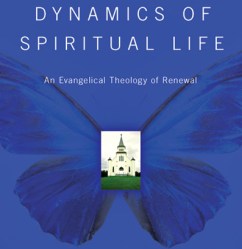
dynamicsSpiritual renewal is a daily process with daily setbacks. And as C.S. Lewis imaginatively reminded us (Screwtape Letters), the Biblical worldview includes a realm of activity beyond physical awareness, from which many of those setbacks originate.

The lineage of human brokenness is mixed. Sin derives from many sources. Envy and arrogance from within led Eve to eat the fruit. Yet as the story goes it was clearly the serpent that lured her in. But surely Adam’s absence had something to do with her transgression as well. As with Eve, so with us.  Sin springs from many fountains.

The flesh, the world, and the devil conspire to preclude our progress in being transformed to look more and more like Jesus in the way we live. While Christians are usually somewhat sensitive to the presence of personal sin (both acts and condition, e.g. 1 John 1:5-10), and also alert to the allures of the world (1 John 2:15-17), there seems to be less perceptiveness regarding the ways of the devil (1 John 3:8-11).

Paul expressed concern for the church in Corinth regarding this potential imperceptiveness of the devil’s work, “…so that we would not be outwitted by Satan: for we are not ignorant of his designs” (2 Cor. 2:11).

I recently finished reading Renewal As a Way of Life: A Guidebook for Spiritual Growth by Richard Lovelace, which emphasizes our need for awareness of Satan’s role in our downfalls. Lovelace brings a balanced approach, neither attributing all sin to the devil nor ignoring the devil’s influence. Lovelace highlights three “clues” for discerning the devil’s work, calling them the “Stratagems of Darkness.”

  1. Temptation: Steering God’s children into forms of sin which are in obvious conformity to the world. “Temptation is not his most dangerous technique with believers, for they cannot be led away from Christ into damnation.” Nonetheless, sin can sideline believers, both through discouragement and discrediting.
  2. Accusation: There is no activity which is more characteristic of the devil (106). How do we become sensitized to spiritual conflict? How do we know when we are up against the devil? Based on the situation in 2 Corinthians 2, where believers are being tempted toward mutual resentment and unhealed relationships due to lack of forgiveness, Lovelace suggests that there are two ways in which the devil normally works: “dividing the body of Christ and using unhealed resentment as a gun emplacement for firing accusations” (153). He goes on to say, “Whenever we find accusation dominating our minds or the minds of others, especially with an apparent admixture of lies, we may be dealing with the devil” (153).
  3. Lying: Jesus said of the devil, “When he lies, he speaks his native language, for he is a liar and the father of lies” (Jn 8:44). “Every part of the church…shows some marks of the devil’s ability to lead us into believing falsehood, causing us to ignore or doubt biblical truth” (108). There are those doctrines which directly contradict biblical teaching, and yet appeal to human arrogance. But there are also innovative philosophies which have a distinct biblical “ring” to them, and yet subtly subvert the teachings of Jesus.

There is one further “clue” to be aware of. Lovelace asks “How can we tell that we are dealing with demonic agents when many of their characteristic strategies employ the temptations, doubts, lies and slanders common to the flesh and the world?” (153).

There is a simple answer to this question. The powers of darkness do not afflict us aimlessly. There is usually design in their operations, and the design centers on blocking the expansion of the Messianic kingdom. Much of our discernment of Satanic powers come as we follow the Holy Spirit’s guidance in mission and ministry. As we begin initiatives for the kingdom, events will turn in a direction precisely calculated to block our efforts….If all of this comes with an especially disabling power behind it, Satan is probably involved.

If you feel the onslaught of temptations, accusations and lies, remember this: “The reason the Son of God appeared was to destroy the works of the devil” (1 Jn 1:8). Or as Lovelace put it, “To topple the power structure created by the interlocking operation of the flesh, the world and the devil, we need a liberator of cosmic dimensions and a Messianic people fully enlightened concerning the difficulty and the supernatural grandeur of the work yet to be done.”

And in addition to the Messiah’s conquering/delivering achievements (Heb 2:14-18), we must remember that we also have the Holy Spirit’s enabling achievement, as Paul directs in Romans 8:13, “If by the Spirit you put to death the deeds of the body, you will live.” The Holy Spirit is the active agency by which the remaining sin in us will be killed.

But to the extent that we are deficient in understanding Satan’s role in influencing, and the Spirit’s role in killing sin, to that extent we will be deficient in the fight and thus flagging in faith and joy.

So go forth and conquer in the confidence of the Messiah and the power of the Spirit.


Resources for further consideration:

Dynamics of Spiritual Life: An Evangelical Theology of Renewal, Richard Lovelace. The original work, from which Renewal As a Way of Life is distilled. More historical/theological context.

The Enemy Within: Straight Talk About the Power and Defeat of Sin, Kris Lundgaard. Drawn heavily from the teaching of John Owen, but much briefer and easier to read.

Overcoming Sin and TemptationJohn Owen. The evangelical standard from which so many others take their cues.

Screwtape Letters, C. S. Lewis. The classic masterpiece that imagines an expert demon who writes to his novice nephew, instructing him on best methods of tempting humans.

What Is Discipling?

Print“Discipling is deliberately doing spiritual good to someone else so that they will be more like Christ.”

So says Mark Dever in “Presenting Them Perfect: What It Means To Disciple Others” (part two in a five-part series on discipling). Below are notes on this sermon from Colossians 1:28-29 which says, “Him we proclaim, warning everyone and teaching everyone with all wisdom, that we may present everyone mature in Christ. For this I toil, struggling with all his energy that he powerfully works within me.”

1. What does it mean to disciple others?

At its core discipling is teaching. Less like a classroom and more like an apprenticeship at a job. Perhaps even more like what our dads and moms have been to us: teaching both facts, but also teaching how to live.

Very intentional. Means picking this person and not that person. There are more people to spend time with than you have time to spend. So you have to make a decision. Who needs the help? Who wants the help (knowing they need it)? Are you able practically to make it happen?

May not always be clear who is the teachers and who is the student. Discipling relationships are always two-way: from one to the other and back again (Col 3:16 – “admonish one another”).

To disciple is to help someone live each day in light of the final day.

Our role in discipling: Intense involvement combined with humble openhandedness. Intense involvement can make us too concerned about our own input. Humble openhandedness reminds us this is God’s work not ours. For his glory and not for the satisfaction we might get out of it.

2. Who are you deliberately loving like this through discipling?

This is what the church is for. So find someone in the congregation who may benefit from a relationship with you. Intentionally invest in their spiritual good.

3. Objections to discipling

Concern 1: This discipler is not ideal. (I wanted an older woman, not a woman just merely older than meAnswer: Neither are you. The more humble you are, the more surprised you’ll be at the wisdom of others

Concern 2: I’m concerned this will undermine other good authority. Answer: Discipling done well encourages submission

Concern 3: This whole thing seems self-centered and prideful. Answer: This only means to follow someone else as they follow Christ.

Concern 4: Isn’t this pushy and imposing? Answer: No, because this is a relationship voluntary on both sides.

Concern 5: I don’t need this. Answer: That’s lone ranger Christianity. But in contrast Jesus set up the local church. Calling us to make his commands to love very real by loving particular people. Christianity is personal but it is not private. God is the only one who doesn’t need to be taught.

Concern 6: This is just for extroverts. Answer: No. This is for all Christians.

Concern 7: I can’t disciple – I’m too imperfect and make too many mistakes. Answer: Discipling is sharing what you do know with love, not sharing what you don’t know. Begin simply by sharing the gospel. Proceed simply by asking questions, climbing into their lives. Anyone truly following Christ can disciple.

Conclusion

Discipling is part of discipleship, not an optional extra to following Jesus.

Think about your approach to church: do you come just wondering when someone else is going to disciple you, or do you come prepared to contribute the progress of others in faith?

What do you mean by saying that you are following Christ, who laid down his life for other, if you are not helping others to follow Christ? How are you following him?

Resurrection: 7 Christian Distinctives

the-averoldi-altarpiece-3794

Titian; Polyptych of the Resurrection – Santi Nazaro e Celso, Brescia

N.T. Wright has thankfully distilled his monumental work The Resurrection of the Son of God into a briefer volume (295 pages instead of 738), including additional concerns. He speaks not only about the resurrection, but also about “the discovery of hope within the present world: about the practical ways in which hope can come alive for communities and individuals who for whatever reason may lack it” (xi). Surprised by Hope defends the heritage of Easter and unfolds the hope of Easter for the present and future life.

In looking forward to celebrating Easter in less than a month, I’ve been encouraged reading Wright’s work. Though I couldn’t endorse his views on justification, I have appreciated his careful study of resurrection in its historical and biblical settings.

Chapter 3 of Surprised by Hope presents the historical setting of the early Christian hope, beginning with views of resurrection held by ancient paganism and Judaism.

For ancient pagans, death was all-powerful. No one could escape its clutches let alone return from it. When ancient pagans spoke of resurrection (to deny it), they did not simply mean “life after death.” Rather, resurrection in the pagan frame was used to denote “new bodily life after whatever sort of life after death there might be.”

For the ancient Jewish world there are two general categories of understanding resurrection. Some agreed with the pagans in denial of any kind of future life. The Saducees are famous for this position. Others believed in an eventual resurrection. On the last day, all the people of God would be given new bodies all at once. When Martha was coming to grips with the death of Lazarus, she said to Jesus, “I know he will rise again in the resurrection on the last day” (Jn 11:24). This was the Jewish conception of resurrection.

The teaching that emerged in early Christian congregations reflected this Jewish background, yet offered distinctive “mutations” as Wright calls them. “The Early Christian belief in hope beyond death belongs demonstrably on the Jewish, not the pagan, map…but in seven significant ways this Jewish hope underwent remarkable modifications.” Wright gives seven distinctively Christian modifications.

  1. Unanimity of Belief: Despite diverse Jewish and pagan backgrounds, Christians did not hold a spectrum of belief about life beyond death. Not until the late second century did the Gnostic idea emerge, namely, the idea of a spiritual experience in the present leading to a disembodied hope in the future. But at first, there was unanimity. “For almost all of the first two centuries, resurrection in the traditional sense holds not just center stage, but the whole stage.”
  2. Circumference to Center: In Second-Temple Judaism, resurrection is important but not that important. But in early Christianity resurrection moved from the circumference to the center. “Take away the stories of Jesus’s birth, and you lose only two chapters of Matthew and two of Luke. Take away the resurrection, and you lose the entire New Testament.”
  3. Resurrection Bodies: In Judaism it is almost always left quite vague as to what sort of body the resurrected will possess. But from the start, early Christians believed that the new body will be a transformed body, a body whose material, created from the old material, will have new properties (based on 1 Corinthians 15, the “newness” is primarily that whereas the old body is corruptible, the new body will be incorruptible).
  4. The Resurrection Split Into Two: For first-century Jews, the idea of resurrection was that it would be a large scale event happening to all God’s people as part of the sudden event in which God’s kingdom would finally come on earth as in heaven. But what becomes the central feature of Christianity is the belief that the “mode of this inauguration” consisted in the resurrection itself happening to one person in the middle of history in advance of it’s great final occurrence, anticipating and guaranteeing the final resurrection of God’s people at the end of history. An initial resurrection as a guarantee of a second and final resurrection.
  5. Collaborative Eschatology: Because resurrection was inaugurated with Jesus but not completed until the end, Christians believed that God called them to work with him in the power of the Spirit to implement the achievement of Jesus in anticipation of the final resurrection, in personal and political life, in mission and holiness. “If Jesus was God’s-future-arrived-in-the-present, then those who belonged to Jesus were charged with transforming the present in the light of that future.”
  6. Metaphorical Use of Resurrection: When resurrection is used metaphorically in Judaism, it refers to the restoration of Israel. But Christianity replaces this with a new metaphorical meaning: resurrection as referring to baptism (e.g. Romans 6:1-5), and resurrection as referring to the new life of strenuous ethical obedience enabled by the Holy Spirit (e.g Romans 6:6-14).
  7. Resurrection and Messiahship: Nobody in Judaism expected the Messiah to die, and therefore nobody imagined him rising from the dead. Judaism understood the Messiah to be the one who would overthrow pagan government and restore God’s justice. Thus, for Judaism, the crucifixion confirmed the impossibility of Jesus being the Messiah. Yet Christians came to affirm that Jesus was indeed the Messiah, precisely because of his resurrection.

Wright notes that these mutations from Jewish to Christian understanding of resurrection demand a historical explanation. Why did these modifications occur? And he goes on to present an historical account of that first Easter Day.

But these seven points deserve contemplation as they represent the development of the Christian understanding of resurrection, which is the epicenter of our faith as Paul reminds the Corinthians.

Now if Christ is proclaimed as raised from the dead, how can some of you say that there is no resurrection of the dead? But if there is no resurrection of the dead, then not even Christ has been raised. And if Christ has not been raised, then our preaching is in vain and your faith is in vain. We are even found to be misrepresenting God, because we testified about God that he raised Christ, whom he did not raise if it is true that the dead are not raised. For if the dead are not raised, not even Christ has been raised. And if Christ has not been raised, your faith is futile and you are still in your sins. Then those also who have fallen asleep in Christ have perished. If in Christ we have hope in this life only, we are of all people most to be pitied. (1 Corinthians 15:12-19)

The Golden Rule Applied to Prayer

Prayer is not the primary duty. The greatest command is not, “Pray to God.” Rather the greatest command is “Love God wholeheartedly.” Prayer, then, is simply a reflection of this prior duty working itself out. Because I love God, I communicate to him my love for him and my need of him. This is the essence of prayer: loving God.

Likewise the second great command is not, “Pray for your neighbor.” Rather, the command is, “Love your neighbor as yourself.” Yet one of the clearest reflections of this love is our praying on behalf of one another. Paul states the Golden Rule in fresh terms, “Let each of you look not only to his own interests, but also to the interests of others.” Again, let this principle be applied to our prayers. Our prayer should be guided not by our own interest, but by the interests of others.prayer together

Such praying directed toward the needs and interest of others is most often called intercession, and this type of prayer is pervasive in the Bible, even when it doesn’t go by that title.

Jesus prays for Peter, “Satan has demanded to have you, that he might sift you like wheat, but I have prayed for you that your faith may not fail” (Luke 22:31-32). And Jesus prays no doubt similarly for all who follow him: “He is able to save to the uttermost those who draw near to God through him, since he always lives to make intercession for them” (Heb 7:25).

These two passages (Luke 22 and Hebrews 7) shed light on one another. Jesus is able to save completely, because he always lives to make intercession. And his making intercession has a protective effect regarding our faith. At those points where we may be weakest in faith—where Satan is most likely to launch his offensive—it is at those points that Christ makes intercession for us. His prayer for us is that our faith would hold strong against the onslaught of Satan’s advance.

His praying is the means; his saving is the end.

Thus if we want to be like Jesus in our praying, then we should pray for others. And as we pray for others, our prayers should be targeting those areas in which they may be weak in faith. As we are aware of their characteristic besetting sins, tension-filled relationships, despair-inducing circumstances, we should target our prayers at their maintenance of faith through these things.

Tim Keller makes this observation about the prayers of the apostle Paul: “It is remarkable that in all of his writings Paul’s prayers for his friends contain no appeals for changes in their circumstances” (Prayer, 20). Rather than praying for change in circumstances, Paul prays that their faith in God and love for God would grow through suffering, not apart from it.

There is no better way to love a brother or sister in Christ than to make intercession for them, specifically that their faith would not fail when under assault.

Giving God Arguments

J.I. Packer says, “Hallowed be your name…is the basic petition of the Lord’s Prayer, the global ideal and desire that all the other petitions are actually spelling out and specifying in one way or another” (Praying: Finding Our Way Through Duty to Delight). Thus, all prayer is really a matter of reasoning with God as to how we would like to see his name honored and exalted (“hallowed”). Stephen Charnock (1628-1680) called this giving God arguments:

Our praying…should consist of arguments for God’s glory and our happiness: not that arguments move God to do that which he is not willing of himself to do for us…as though the infinitely wise God needed information, or the infinitely loving God needed persuasion, but it is for strengthening our faith in him. All the prayers of Scripture you will find to be reasoning with God, not a multitude of words heaped together; and the design of the promises is to furnish us with a strength of reason in this case: Dan 9:16, “Now according to all thy righteousness, I beseech thee, let thy anger and thy fury be turned away from thy city Jerusalem.” He [Daniel] pleads God’s righteousness in his promise of the set time of deliverance; after he had settled his heart in a full belief of the promise of deliverance, he shows God’s own words to him. The arguments [in this and all biblical prayers] you will find drawn from the covenant in general, or some promise in particular, or some attribute of God, or the glory of God.”

(Charnock, Works, 4.8)

Billy Graham: America’s Pastor

Billy Graham may have addressed more people face-to-face than anyone else in history, with the possible exception of Pope John Paul II.[1] By the numbers, his effectiveness was spectacular. He addressed face-to-face with the gospel more than 210 million people spanning over 185 countries in 417 crusades over nearly sixty years.[2] Distinguished historian Martin Marty said that the Mt. Rushmore of Protestant American shapers includes Jonathan Edwards, Martin Luther King, Jr., and Billy Graham.[3] And George H. W. Bush had called him “America’s pastor.”[4] Not bad for a farm boy who got his start in the rural piedmont region of North Carolina.

And few people could be more suited to write a biography on Graham than Grant Wacker, the Gilbert T. Rowe professor of Christian history at Duke University Divinity School. I was introduced to Wacker through his work on early Pentecostals and American culture, Heaven Below. Wacker’s outstanding new biography on Graham is scholarly and disciplined, “an interpretation rather than a strictly chronological account” (5). He portrays Graham as one of the architects of new evangelicalism (perhaps the primary) and as the face of American religion in the public square.

Wacker says his book is propelled by three questions:

  1. How did Graham become the “least colorful and most powerful preacher in America”?
  2. How did he help expand traditional evangelical rhetoric into the moral vocabulary that millions of American used to make sense of both their private and their public experiences?
  3. How did he help mold the culture that created him and that he created? How did he speak both for and to modern America?

To answer these three questions, Wacker proposes one answer which is the core of his book:

From first to last, Graham displayed an uncanny ability to adopt trends in the wider culture and then use them for his evangelistic and moral reform purposes.

I found Wacker to be extremely fair at every turn, in interpreting the life and significance of a man who would be easy to malign (as did Reinhold Niebuhr) or divinize (as have many biographers). Wacker critiques the crusades as theatrical (140), noting that they “embodied the entrepreneurial spirit of American evangelicalism at its most efficient best” (151). Yet he portrays Graham as a man of deep integrity, guilty of little more than “flashes of vanity.”

Wacker’s historical analysis would make it easy to criticize Graham as a naive showman, employing entrepreneurial vision for self-aggrandizement. And yet Graham’s steady faithfulness to the gospel message and his persistent moral integrity should give us pause at such uncharitable assessments.

Graham’s critics repeatedly objected that his gospel had no bite. He called them to Christ but did not expect them to change in any fundamental way….

[But] there is danger in overthinking the data… Hundreds of thousands–perhaps millions–of Americans attested that Graham had played a pivotal role in their journeys. Other pastors had their jobs. He had his. It was to nurture the private life of a public faith.

Whether you are a Graham critic or fan, you will appreciate Wacker’s far-reaching and insightful analysis of American culture, religious culture in particular, and Billy Graham’s role in shaping it.

[1] Grant Wacker, America’s Pastor: Billy Graham and the Shaping of a Nation (Cambridge, Mass: Bellknap Press, 2014), 21.

[2] These numbers are generally agreed upon with slight variation. This particular set of numbers comes from Nancy Gibbs and Michael Duffy, The Preacher and the Presidents: Billy Graham in the Whitehouse (New York: Center Street, 2007), vii. But the biography of Graham on the BGEA website provides similar data, available at http://billygraham.org/about/biographies/billy-graham/.

[3] Martin E. Marty, “Billy Graham Taught Christians New Ways of Being in the World” (September 30, 2013), Martin Marty Center, University of Chicago Divinity School, accessed January 8, 2015, https://divinity.uchicago.edu/sightings/billy-graham-taught-christians-new-ways-being-world-martin-e-marty.

[4] George H. W. Bush, quoted without direct citation in David Aikman, Billy Graham: His Life and Influence (Nashville: Thomas Nelson, 2007), 234.

Does Prayer Make a Difference?

There’s an apparent incompatibility between praying for God to take a specific course of action when we know that “Our God is in the heavens; he does all that he pleases” (Ps. 115:3) If what he does is based on what he pleases, then how could it be based on what we pray?

C. S. Lewis reflects on this very question:

Can we believe that God ever really modifies his action in response to suggestions of man? For infinite wisdom does not need telling what is best, and infinite goodness needs no urging to do it. But neither does God need any of those things that are done by finite agents, whether living or an inanimate. He could, if he chose, repair our bodies miraculously without food; or give us food without the aid of farmers, bakers, and butchers; or knowledge without the aid of learned men; or convert the heathen without missionaries. Instead, he allows soils and weather and animals and the muscles, minds, and wills of men to cooperate in the execution of his will. “God,” says Pascal, “instituted prayer in order to lend to his creatures the dignity of causality.” But it is not only prayer; whenever we act at all, He lends us that dignity. It is not really stranger, nor less strange, that my prayers should affect the course of events than that my other actions should do so.

C. S. Lewis, The Efficacy of Prayer